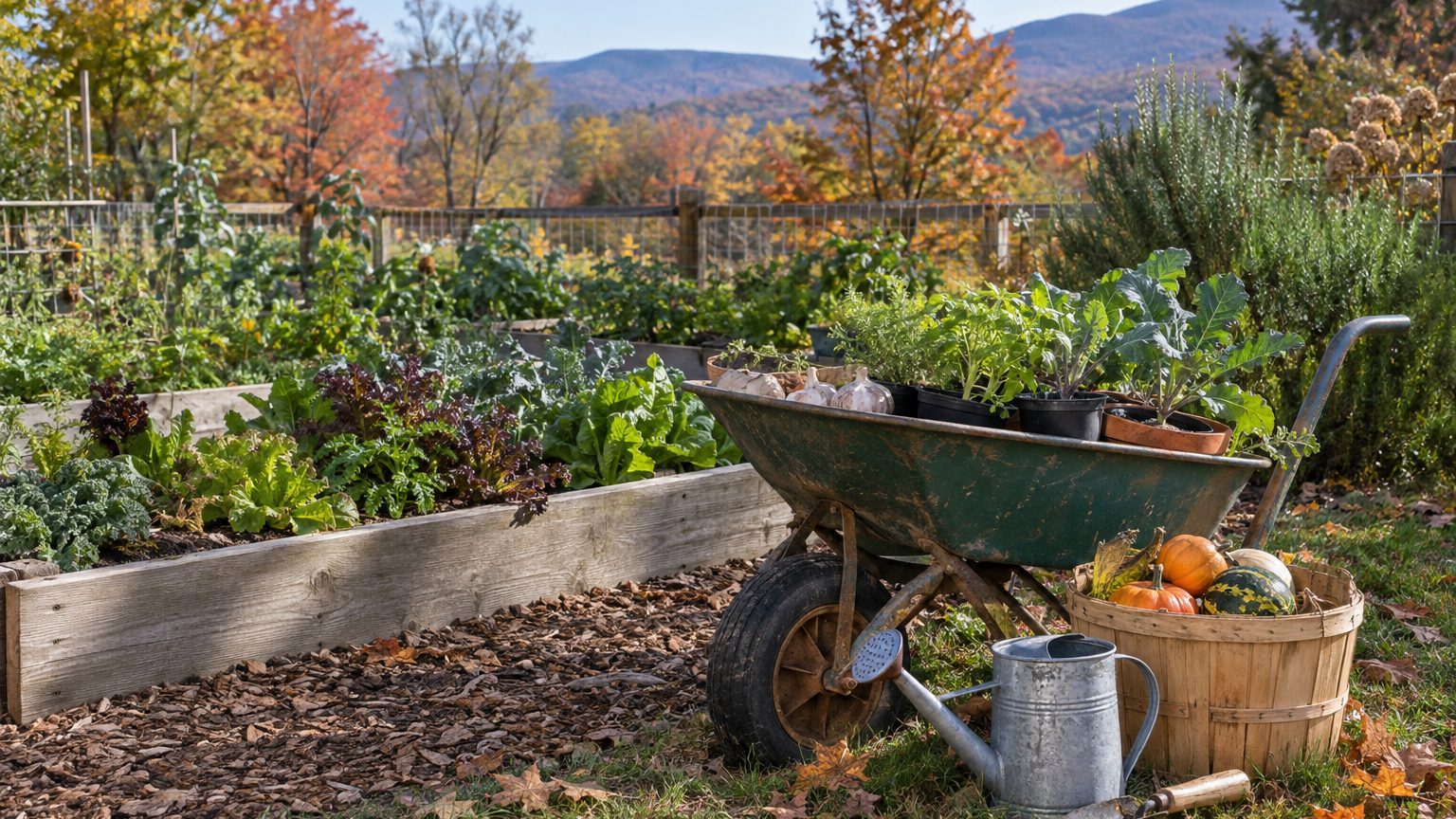

February has no single planting list, because a gardener in Alberta and one in Georgia are doing different jobs in different places. The first is under grow lights with onions and leeks. The second is setting kale and lettuce into open ground. Your task this month is to count back from your own last spring frost and see which window has opened. Look up that frost date first, then sow only what falls inside it.
What to plant in February: it depends on how far off your last frost is

In February most gardening happens indoors or in the run-up to your last spring frost. What you do depends on how many weeks separate you from that frost, so the same month sends one gardener to the seed tray and another to the garden bed.
Each row below pairs a task with a rule from a university extension. The count shows how many of the 63 U.S. states and Canadian provinces and territories documented here have that window opening in February, counted back from the last spring frost at each territory’s reference city. A window that opens in February does not close at month’s end, and colder or milder parts of the same territory will open earlier or later.
| Task | Rule and source | Territories where it opens in February | Examples |
|---|---|---|---|
| Sow onions and leeks indoors | 14-15 weeks indoors (University of Minnesota Extension) | 7 of 63 | Alberta, Manitoba, New Brunswick |
| Sow celery indoors | 12-13 weeks indoors (University of Minnesota Extension) | 13 of 63 | Alaska, Alberta, Manitoba |
| Sow broccoli, cabbage, cauliflower and head lettuce indoors | 10-11 weeks indoors (University of Minnesota Extension) | 15 of 63 | Alaska, Colorado, Idaho |
| Sow peppers, eggplant and okra indoors | 9 weeks indoors (University of Minnesota Extension) | 19 of 63 | Colorado, Idaho, Illinois |
| Sow tomatoes indoors | 5-6 weeks indoors (University of Minnesota Extension) | 21 of 63 | Alabama, British Columbia, Connecticut |
| Set out kale transplants | 4-5 weeks before the last frost-free date (Utah State University Extension) | 18 of 63 | Alabama, Arkansas, British Columbia |
| Set out broccoli and cabbage transplants, sow lettuce and spinach seed outdoors | 2-3 weeks before the last frost (Utah State University Extension) | 9 of 63 | Alabama, Arkansas, Georgia |
Read the table from the top and you see the longest jobs start first. Onions and leeks need the most lead time, so they open in the fewest territories this month. Tomatoes need the least indoor time and open in the most. Arizona, California and Hawaii have no usable last spring frost date at their reference cities, so no count is possible for them.
All 63 state and province guides for February
Each guide below gives the month’s planting advice for one state or province. The zone range is the territory’s whole range, and the reference city is one place in it: your own county can differ by weeks.
Northeast
| Guide | Hardiness zone range | Reference city | Normal last spring frost |
|---|---|---|---|
| What to Plant in Connecticut in February | 6a-7b (USDA) | Bridgeport | April 2 to April 12 |
| What to Plant in Maine in February | 3b-6a (USDA) | Portland | April 22 to May 1 |
| What to Plant in Massachusetts in February | 5a-7b (USDA) | Boston | April 1 to April 8 |
| What to Plant in New Hampshire in February | 3b-6a (USDA) | Manchester | April 16 to April 27 |
| What to Plant in New Jersey in February | 6a-7b (USDA) | Newark | March 29 to April 6 |
| What to Plant in New York in February | 3b-7b (USDA) | New York City | March 23 to April 3 |
| What to Plant in Pennsylvania in February | 5a-7b (USDA) | Philadelphia | March 29 to April 6 |
| What to Plant in Rhode Island in February | 6a-7b (USDA) | Providence | April 7 to April 17 |
| What to Plant in Vermont in February | 3b-5b (USDA) | Burlington | April 30 to May 10 |
Midwest
| Guide | Hardiness zone range | Reference city | Normal last spring frost |
|---|---|---|---|
| What to Plant in Illinois in February | 5a-7b (USDA) | Chicago | April 11 to April 22 |
| What to Plant in Indiana in February | 5b-7a (USDA) | Indianapolis | April 9 to April 21 |
| What to Plant in Iowa in February | 4b-6a (USDA) | Des Moines | April 12 to April 24 |
| What to Plant in Kansas in February | 5b-7a (USDA) | Wichita | April 4 to April 18 |
| What to Plant in Michigan in February | 4a-6b (USDA) | Detroit | around April 30 in the Detroit area; early to mid May across most of the Lower Peninsula |
| What to Plant in Minnesota in February | 3a-5a (USDA) | Minneapolis | April 17 to April 30 |
| What to Plant in Missouri in February | 5b-7b (USDA) | Kansas City | April 6 to April 20 |
| What to Plant in Nebraska in February | 4a-5b (USDA) | Omaha | April 12 to April 23 |
| What to Plant in North Dakota in February | 3a-4b (USDA) | Fargo | May 4 to May 15 |
| What to Plant in Ohio in February | 5b-6b (USDA) | Columbus | May 5 to May 15 (zone 6a) |
| What to Plant in South Dakota in February | 3b-5b (USDA) | Sioux Falls | April 29 to May 9 |
| What to Plant in Wisconsin in February | 3b-6a (USDA) | Milwaukee | April 16 to April 29 |
| Guide | Hardiness zone range | Reference city | Normal last spring frost |
|---|---|---|---|
| What to Plant in Alabama in February | 7a-9a (USDA) | Huntsville | March 19 to April 3 |
| What to Plant in Arkansas in February | 6b-8a (USDA) | Little Rock | March 12 to March 28 |
| What to Plant in Delaware in February | 7a-8a (USDA) | Wilmington | April 3 to April 14 |
| What to Plant in Florida in February | 8b-11b (USDA) | Jacksonville | February 16 to March 7 |
| What to Plant in Georgia in February | 6a-9b (USDA) | Atlanta | March 11 to March 29 |
| What to Plant in Kentucky in February | 6a-7a (USDA) | Louisville | March 24 to April 4 |
| What to Plant in Louisiana in February | 8a-10a (USDA) | New Orleans | January 18 to February 8 |
| What to Plant in Maryland in February | 5b-8a (USDA) | Baltimore | April 3 to April 16 |
| What to Plant in Mississippi in February | 7b-9a (USDA) | Jackson | March 6 to March 22 |
| What to Plant in North Carolina in February | 5b-8b (USDA) | Charlotte | March 23 to April 5 |
| What to Plant in South Carolina in February | 7a-9a (USDA) | Charleston | February 28 to March 17 |
| What to Plant in Tennessee in February | 5b-8a (USDA) | Nashville | March 31 to April 12 |
| What to Plant in Virginia in February | 5a-8b (USDA) | Virginia Beach | March 20 to April 3 |
| What to Plant in West Virginia in February | 5a-7a (USDA) | Charleston | April 9 to April 23 |
| Guide | Hardiness zone range | Reference city | Normal last spring frost |
|---|---|---|---|
| What to Plant in Arizona in February | 4b-10b (USDA) | Phoenix | no freeze in most years; a rare cold snap can bring 32F between late December and mid January |
| What to Plant in New Mexico in February | 4b-9a (USDA) | Albuquerque | March 31 to April 12 |
| What to Plant in Oklahoma in February | 6a-8a (USDA) | Oklahoma City | March 28 to April 10 |
| What to Plant in Texas in February | 6a-10a (USDA) | Houston | February 4 to March 1 |
| Guide | Hardiness zone range | Reference city | Normal last spring frost |
|---|---|---|---|
| What to Plant in Alaska in February | 1a-8a (USDA) | Anchorage | May 3 to May 12 |
| What to Plant in California in February | 5a-11a (USDA) | Los Angeles | no freeze occurs in an average year |
| What to Plant in Colorado in February | 3b-7b (USDA) | Denver | May 1 to May 11 |
| What to Plant in Hawaii in February | 9a-13a (USDA) | Honolulu | no freeze occurs in inhabited areas |
| What to Plant in Idaho in February | 3b-7b (USDA) | Boise | April 23 to May 7 |
| What to Plant in Montana in February | 3a-6a (USDA) | Billings | April 29 to May 10 |
| What to Plant in Nevada in February | 4a-10a (USDA) | Las Vegas | January 7 to February 1 |
| What to Plant in Utah in February | 4a-9a (USDA) | Salt Lake City | April 12 to April 29 |
| What to Plant in Wyoming in February | 3a-6a (USDA) | Cheyenne | May 7 to May 18 |
| Guide | Hardiness zone range | Reference city | Normal last spring frost |
|---|---|---|---|
| What to Plant in Oregon in February | 4a-9b (USDA) | Portland | March 6 to March 21 |
| What to Plant in Washington in February | 4a-9a (USDA) | Seattle | February 27 to March 18 |
| Guide | Hardiness zone range | Reference city | Normal last spring frost |
|---|---|---|---|
| What to Plant in Alberta in February | 4a (Canadian system, not USDA) | Calgary | on average May 21 |
| What to Plant in British Columbia in February | 9a (Canadian system, not USDA) | Vancouver | on average March 18 |
| What to Plant in Manitoba in February | 3b (Canadian system, not USDA) | Winnipeg | on average May 23 |
| What to Plant in New Brunswick in February | 5a (Canadian system, not USDA) | Moncton | on average May 23 |
| What to Plant in Newfoundland and Labrador in February | 6a (Canadian system, not USDA) | St. John's | on average May 30 |
| What to Plant in Northwest Territories in February | 1b (Canadian system, not USDA) | Yellowknife | on average May 25 |
| What to Plant in Nova Scotia in February | 6b (Canadian system, not USDA) | Halifax | on average May 7 |
| What to Plant in Nunavut in February | 0a (Canadian system, not USDA) | Rankin Inlet | on average June 19 |
| What to Plant in Ontario in February | 7a (Canadian system, not USDA) | Toronto | on average April 30 |
| What to Plant in Prince Edward Island in February | 5b (Canadian system, not USDA) | Charlottetown | on average May 16 |
| What to Plant in Quebec in February | 5b (Canadian system, not USDA) | Montreal | on average May 6 |
| What to Plant in Saskatchewan in February | 3a (Canadian system, not USDA) | Saskatoon | on average May 18 |
| What to Plant in Yukon in February | 1b (Canadian system, not USDA) | Whitehorse | on average June 5 |
Frost dates for every state and province are on the first and last frost dates by state page.
What to start indoors in February
The indoor sowings follow the University of Minnesota Extension guide to starting seeds indoors, which lists weeks indoors before planting out. Count that many weeks back from your last spring frost and you have your sowing window. Here is the order the windows open:
- Onions and leeks: 14-15 weeks. The window opens in February in 7 of 63 territories, including Alberta, Manitoba, New Brunswick and Newfoundland and Labrador.
- Celery: 12-13 weeks. It opens in 13 of 63, including Alaska, Alberta, Manitoba and North Dakota.
- Broccoli, cabbage, cauliflower and head lettuce: 10-11 weeks. It opens in 15 of 63, including Alaska, Colorado, Idaho and Maine.
- Peppers, eggplant and okra: 9 weeks. It opens in 19 of 63, including Colorado, Idaho, Illinois and Indiana.
- Tomatoes: 5-6 weeks. It opens in 21 of 63, including Alabama, British Columbia, Connecticut and Delaware.
These counts come from the last spring frost at each territory’s reference city, so treat them as a pointer to your region and not as a sowing date. The same extension guidance says to harden off all plants over the last 1-2 weeks before they go out, so build that into your count. Seedlings that skip it go from a windowsill straight to open air.
For exact dates, open the indoor seed-starting calendar for your state. If your window has not opened yet, the March guide picks up the sowings that open next.
What can go outside before the last frost
Very little goes into the ground in February, and the hardy crops that can do so run on their own rules. Utah State University Extension’s Kale in the Garden says: « Transplants should be planted 4-5 weeks before the last frost free date for the growing area. » That window opens in February in 18 of 63 territories, among them Alabama, Arkansas, British Columbia and Georgia.
The rules for these crops start later, closer to the frost. Utah State’s Broccoli in the Garden says: « Transplants may be planted 2-3 weeks before the last frost free date for the growing area. » Its Lettuce in the Garden says: « Plant seeds ¼-½ inch deep, 2-3 weeks before the last frost. » For spinach it says: « Plant seeds ½ inch deep, 2-3 weeks before the last frost in the spring. » Counted back from the reference-city frost, only 9 of 63 territories see these windows open in February. Alabama, Arkansas, British Columbia and Georgia are among them. Across most of the rest, the outdoor work starts later.
Kale opens in twice as many territories as the others because its lead time of 4-5 weeks is longer. A gardener who sees kale open and broccoli not yet open is reading the table correctly.
One outdoor job does not depend on the frost count. The University of Minnesota Extension, in Pruning and training apple trees, says: « Fruit trees should be pruned every year in late winter or early spring, preferably after the coldest weather has passed and before growth begins. » Judge the timing by your own weather and by how close buds are to breaking, not by the calendar page.
Reading the dates: United States and Canada are not measured the same way
The two countries’ figures are built differently, and they should not be set side by side. The U.S. figures use NOAA’s NCEI U.S. Climate Normals for 1991-2020. They read a freeze-probability window, the 30-70% band for a 32F freeze, so the last frost is a range and not a single day. The Canadian figures use Environment and Climate Change Canada’s Canadian Climate Normals for 1981-2010. Those give an average date, a different kind of number from a probability band.
Canada also has its own plant hardiness zone system. Do not read a Canadian zone as a U.S. one, and do not carry a frost date from one country to the other.
Both sets of figures are read at a reference city. That is one place, not a whole territory. A state or province with mountains, a coast or a long north-south span has colder and milder pockets that open each window earlier or later than the count suggests. Arizona, California and Hawaii show the limit most plainly, because their reference cities have no usable last spring frost date at all.
Use the table of state and province pages on this page. Find yours, open its page for the month, and read the frost-based timing for the tasks that apply to you. Each state page has its own frost dates, and those matter more than any national count.
Then check the timing with your local cooperative extension office. It knows your county’s microclimates, which a single reference city cannot show. Once you have a frost range, the same counting-back method works for fall sowing, which the August guide covers.
Is it too early to start tomatoes indoors in February?
It depends on your last frost. The University of Minnesota Extension gives 5-6 weeks indoors, and that window opens in February in 21 of 63 territories. If your window has not opened yet, an earlier start only leaves the plants waiting indoors longer.
Why are onions and leeks the first thing on the list?
They need 14-15 weeks indoors, the longest lead time in the University of Minnesota Extension guide. That is why the window opens this month in just 7 of 63 territories, including Alberta, Manitoba and Saskatchewan.
My state is not in the examples. Does that mean I plant nothing?
No. The examples name at most a few territories per task. Your window may open in February under a different task, or open later. Check your state or province page for the month.
Why is there no February count for Arizona, California or Hawaii?
Their reference cities have no usable last spring frost date, so a count back from frost cannot be computed. Gardeners there should rely on local extension guidance and their own region’s conditions.
Planting rules and extension guidance can change, so confirm current rules with your state or provincial extension service before you act.