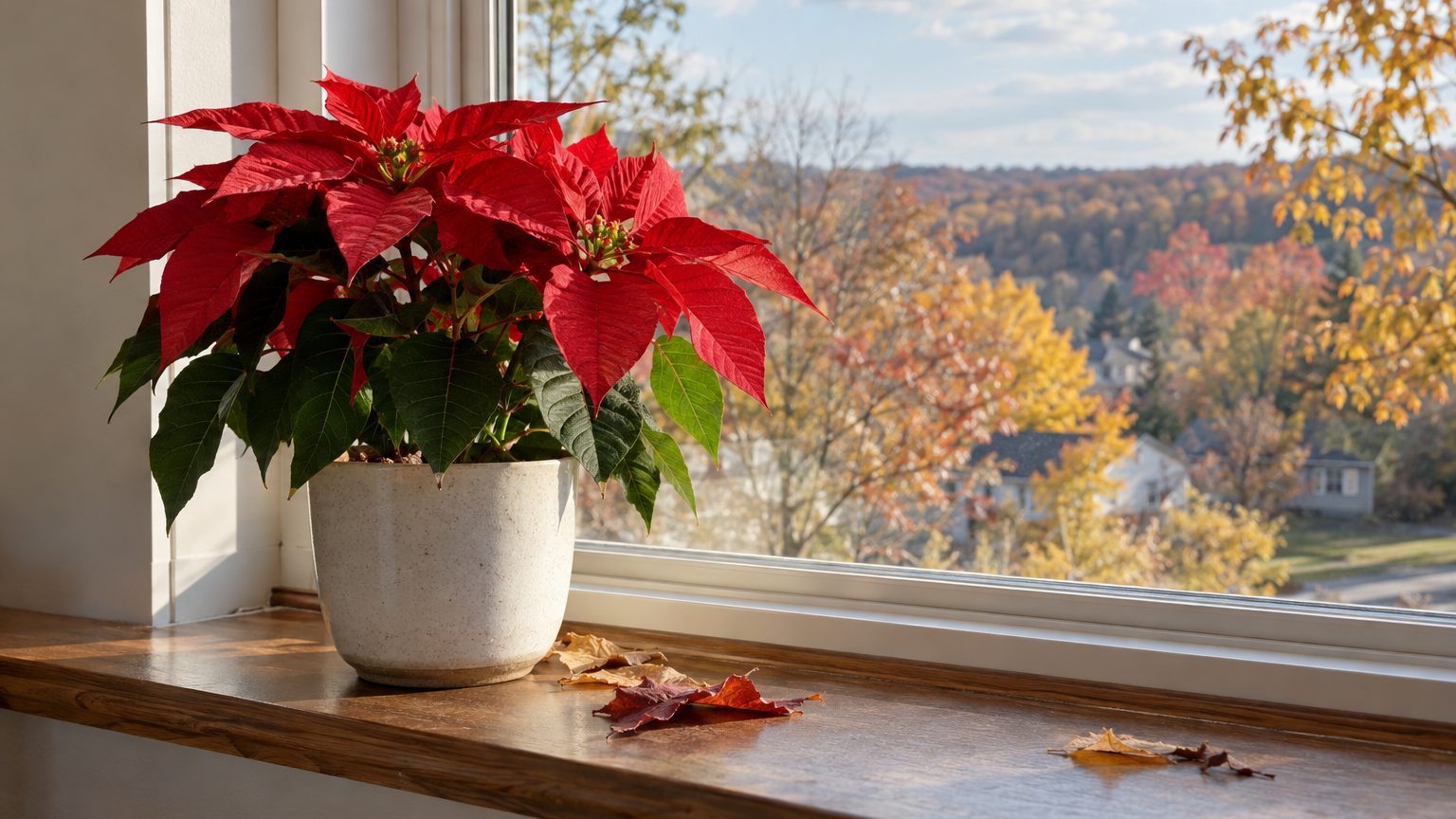

A poinsettia that sheds leaves within days of coming home from the store is almost always reacting to a change in its environment, not dying of some mysterious disease. The plant is a tropical shrub native to southern Mexico, and it sulks when it gets cold air, soggy roots, or dry heat. Six problems account for nearly every case, and most are fixable if you catch them early.
Cold drafts and the trip home
Poinsettias are tropical, and temperatures below about 50°F can damage them.
That makes the walk from the store to your car the first danger zone. A plant carried across a chilly parking lot in November or December without a sleeve or bag can show leaf drop two or three days later, once the damage finally registers. Wrap it in paper or a plastic sleeve before you step outside, and warm the car first if you can.
Inside the house, the trouble spots are predictable: a windowsill with a gap in the weatherstripping, a spot beside a front door that opens all day, a porch table where it seemed festive. Leaves that touch cold window glass often turn translucent or blotchy before they fall. Aim for daytime temperatures between 65°F and 70°F, and nothing below 60°F at night.
Water: too much, too little, or the wrong kind of schedule
Overwatering kills more poinsettias than anything else. Most come in decorative foil wrapping, and the pot inside has no way to drain, so water pools at the bottom and the roots start to rot. The telltale sign is lower leaves that turn yellow, then drop, while the soil stays wet and sometimes smells sour.
Poke a finger an inch into the soil. If it feels damp, wait.
Underwatering looks different. Leaves wilt, curl, and turn dry or crispy before dropping, and the pot feels surprisingly light when you lift it. A plant that has dried out completely can sometimes recover if you soak the pot in a sink for 15 to 20 minutes and let it drain thoroughly, but repeated cycles of drought and flood will strip it bare.
The fix is to pull the pot out of its foil, water at the sink until liquid runs from the bottom, and let it drain fully before it goes back. Most homes need this about once a week, though a heated room in a dry state like Colorado or Arizona may need it more often. Check by feel rather than by calendar.
Light, heat, and dry indoor air
Poinsettias want bright, indirect light, roughly six hours a day. A spot near an east or south-facing window, a few feet back from the glass, works well. In a dim corner, the plant will slowly drop leaves as it tries to conserve energy, and the ones that fall tend to be older and shaded.
Heat is the opposite trap. Placing a poinsettia over a heating vent, next to a fireplace, or on top of a warm appliance blasts it with dry air, and leaves can brown at the edges and fall within a week. Winter furnace air often drops indoor humidity under 30 percent, which is drier than many deserts.
A tray of pebbles with water beneath the pot (keeping the pot above the waterline) adds a little local humidity. Moving the plant a few feet from the vent often does more than any gadget.
Ethylene, pests, and the natural end of the season
Ethylene is a gas that ripens fruit and also tells plants to shed leaves. Ripening bananas and apples release it, as do gas leaks and exhaust fumes from an attached garage. A poinsettia parked next to the fruit bowl is a surprisingly common culprit, and a small, unnoticed natural gas leak from an old stove or furnace can do the same damage.
Pests are the sixth cause, and they work quietly. Whiteflies cluster on the undersides of leaves and puff into the air when the plant is disturbed, while spider mites leave fine webbing and tiny yellow speckles. Both suck sap from the leaves, which then yellow and drop. Turn a few leaves over once a week. Spraying with insecticidal soap, following the label, usually handles light infestations, and a plant that is badly infested may not be worth saving.
Then there is the part nobody enjoys admitting. Even a perfectly cared-for poinsettia loses its colorful bracts (the red, white, or pink “petals” that are actually modified leaves) after several weeks, and the plant may drop some foliage by late winter or spring. That is a normal cycle, not a failure.
How to rescue a plant that is already dropping leaves
Start by ruling out the easy answers. Check the temperature where the plant sits, feel the soil, look under the leaves, and lift the pot to see whether water is trapped in the foil. Usually one of these will jump out within five minutes.
Move the plant away from drafts and vents, and stop fertilizing while it is stressed. Poinsettias do not need feeding while they are in bloom, and extra fertilizer on a struggling root system only adds salt burn to the list of problems. If the roots look brown and mushy when you slide the plant out of its pot, trim away the rotten parts, repot into fresh, well-draining potting mix, and water sparingly for a couple of weeks.
Losing a few lower leaves is not a crisis. Losing half the plant in a week points to a sudden shock, usually cold or drowning roots, and the remaining leaves often hold on once conditions improve.
Expect some patience, too. A stressed poinsettia can take two to four weeks to settle down, and the plant often looks worse before it stabilizes. Resist the urge to water more, move it again, or fuss with it daily.
If you want to keep it past the holidays, the University of Minnesota Extension and other land-grant programs describe a schedule: cut stems back to about 4 to 6 inches in spring, repot, and put it outside after nighttime temperatures stay above 50°F. To get colored bracts again by December, the plant needs about 14 hours of uninterrupted darkness each night starting in early October, for roughly eight to ten weeks. Even a hallway light switched on for a minute can interrupt the process, which is why so many reblooming attempts end up green.