
An amaryllis bulb can bloom for decades, but only if you treat the weeks after the flowers fade as the main event. Most bulbs that never rebloom were not defective. They were starved of leaf time, or woken up before they had rested.
Keep the leaves working after the flowers fade
Once the last blossom browns, cut the flower stalk off about an inch above the bulb. Leave the leaves alone. They are the bulb’s solar panels, and everything the plant needs for next year’s bloom gets manufactured there.
Move the pot to the sunniest window you have, ideally south-facing, where it gets at least six hours of bright light. Water when the top inch of soil feels dry, and feed every two to four weeks with a balanced houseplant fertilizer at half the label strength. A bulb in a 6-inch pot has limited reserves, so regular feeding matters.
Keep the neck of the bulb above the soil line. Buried too deep, it can rot.
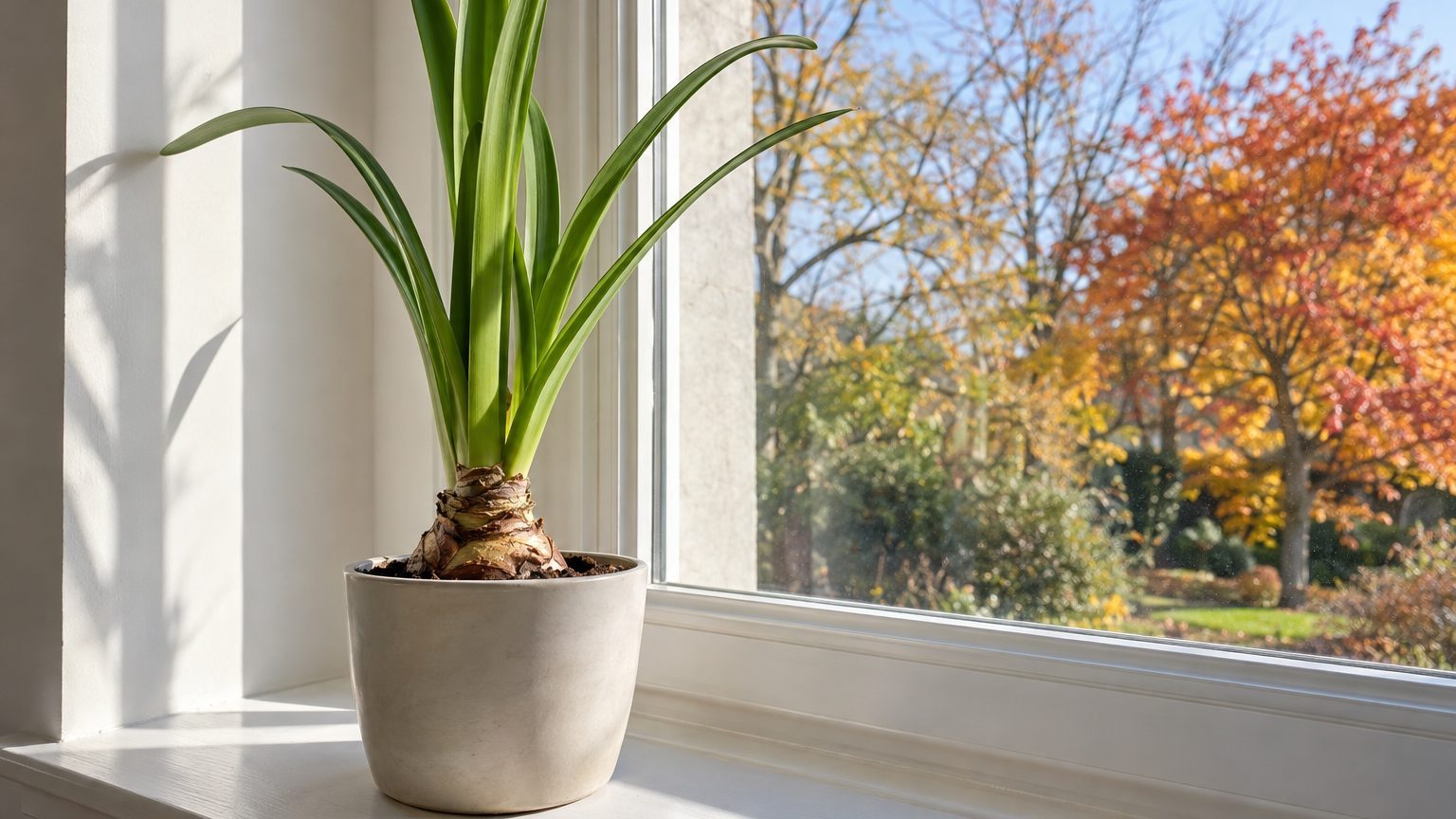
Leaves that stay green and strappy all spring are a good sign. Floppy, yellowing foliage in the first month usually points to overwatering or a pot with no drainage hole. A healthy bulb can grow a leaf set 18 to 24 inches long, and that is the size of the energy factory you are after.
Move outdoors for summer, then watch the calendar
After your last frost date, usually somewhere between late April in Georgia and late May in Minnesota, the pot can go outside. Start it in shade for a week, then shift it to bright light, because leaves that spent winter behind glass will scorch in direct sun. Leave the bulb in its pot and sink the pot into a garden bed if you like, which keeps the soil from drying out so quickly.
Summer is growth season. Water often, fertilize steadily, and let the leaves bulk up the bulb, which may swell noticeably by August. Watch for red blotch (a fungal disease that leaves reddish spots on the bulb and leaves) and for amaryllis caterpillars in the Gulf states, which can chew leaves to stubs in days.
Stop feeding around mid-August.
That is the signal to the bulb that the party is over. Cut back on water through late summer so the foliage starts to fade naturally, and bring the pot indoors before nights drop below 50°F. Frost will damage the bulb, so do not gamble on a warm October.
Give the bulb its dormancy
Dormancy is the step people skip, and it is the one that triggers flowering. Bulbs need roughly eight to ten weeks of rest, with no water and cool, dark conditions. A basement, closet, or unheated garage that holds steady between 40°F and 55°F works well, as long as it stays above freezing.
Lay the pot on its side or leave it upright, and stop watering completely. The leaves will yellow and wither over several weeks, and you can trim them once they are fully dry and papery. Pulling green leaves early cuts the bulb’s final energy transfer short, so be patient and let the plant draw the nutrients back down.
Some bulbs will send up a flower spike on their own before the rest period ends. If that happens, bring the pot into the light and start watering. Nature has made the call.
The bulb should feel firm, like a hard onion. A soft or mushy one has rotted and will not recover. A little papery skin is normal.
Restart timing and what to expect
Counting backward from the date you want flowers helps. Amaryllis typically bloom six to eight weeks after you resume watering, sometimes as quickly as four. For a Christmas display, that means waking the bulb in early to mid-November. For Valentine’s Day, look at the calendar in late December.
Repotting is optional every year. Amaryllis like to be snug, with about an inch of space between the bulb and the pot rim. Every three or four years, or when the bulb has crowded the container, move up one size and refresh the top few inches of soil with fresh potting mix. Even in years you skip repotting, scrape off the top inch and replace it.
To restart, bring the pot into a warm room, ideally 70°F to 75°F, and water thoroughly once. Then hold off until you see green growth, since a soaked bulb with no active roots can rot. When the spike appears, water regularly and turn the pot a quarter turn every few days to keep it from leaning toward the window.
Warmth speeds things up. A bulb set on a heat mat or near a warm appliance will often send up a spike days sooner than one sitting in a cool room.
When a bulb still refuses to bloom
Several causes recur. Leaves that were cut too early, too little light over summer, and a skipped dormancy account for most failures. Bulbs that are too small, under about 3 inches across, may also need another year or two of growing before they can flower.
Leaves but no flowers is common after the first year. If it happens, do not panic or toss the bulb. Repeat the cycle, be more generous with light and fertilizer, and make sure the rest period is truly cool and dry.
Tall stalks can topple, particularly on large-flowered hybrids. A bamboo stake and a soft tie fix that. Rotating the pot also helps, because stems lean hard toward light.
Bulbs sold pre-waxed are a different story, since they are meant as one-time displays with no soil. They rarely rebloom, because the wax blocks the roots and seals in moisture. If you want a plant that lasts for decades, buy a regular bulb in soil.
One last detail for pet owners: every part of an amaryllis, bulb especially, contains lycorine and related compounds that are toxic to cats and dogs, so keep the pot, and the discarded leaves, out of reach during the rest period too.