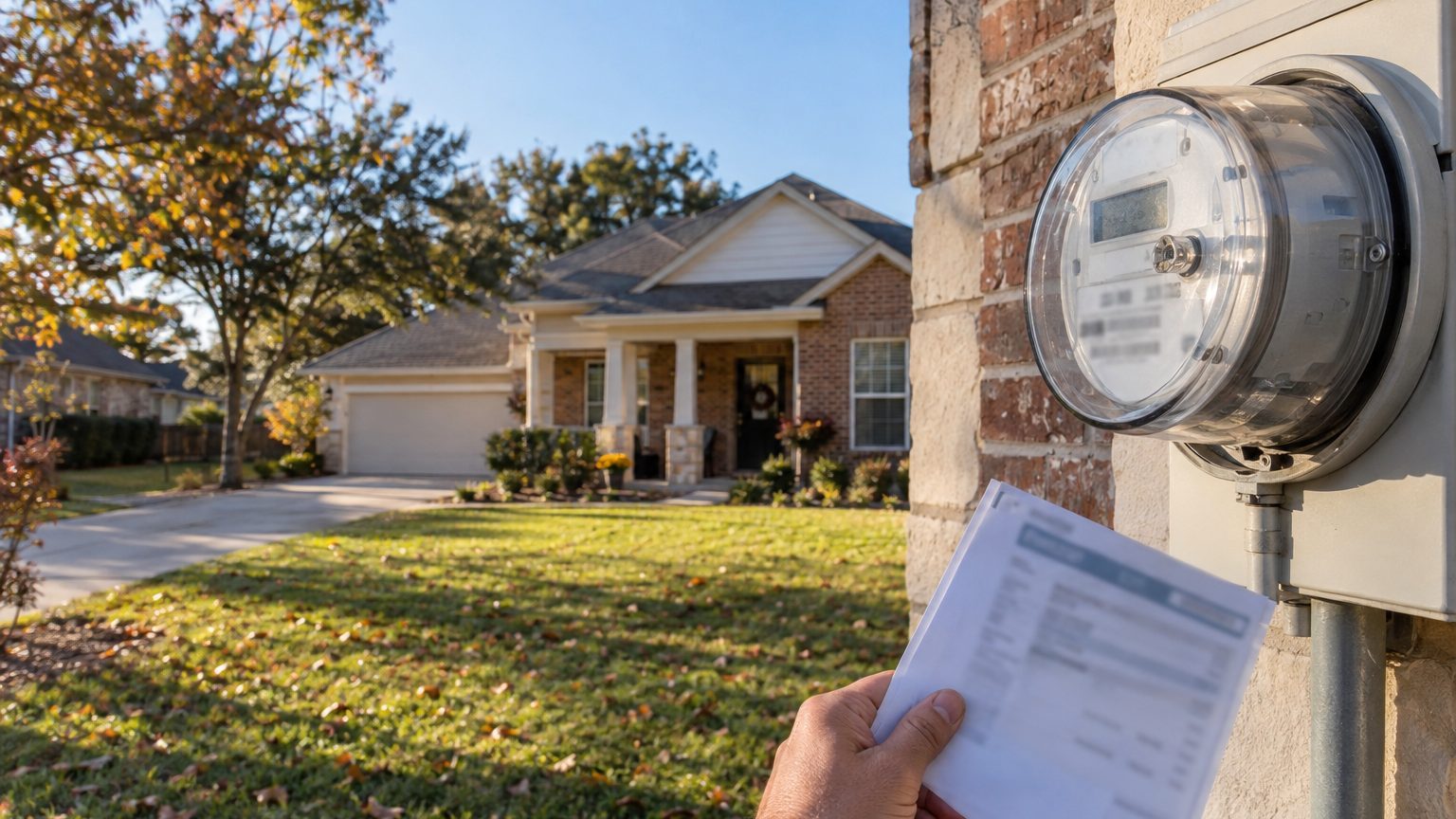

Iowa households paid an average of $111.54 a month for electricity in 2024, according to the U.S. Energy Information Administration (EIA). The national average that year was $142.26. Both are yearly averages across every residential customer, so a single home can sit well above or below them depending on how it heats and cools.
The average electric bill in Iowa
The EIA’s average monthly bill table for 2024 (Table 5A, built from form EIA-861) shows the typical Iowa residential customer using 832 kWh a month at 13.40 cents per kWh. That adds up to the $111.54 bill. The U.S. average was 863 kWh at 16.48 cents, or $142.26. The Iowa figure covers 1,448,818 residential customers.
| 2024 residential average | Monthly bill | Monthly use | Price per kWh |
|---|---|---|---|
| Iowa | $111.54 | 832 kWh | 13.40 cents |
| United States | $142.26 | 863 kWh | 16.48 cents |
| Iowa vs. U.S. | -$30.72 | -31 kWh | -3.08 cents |
Ranked on the average bill among the 50 states and the District of Columbia, Iowa is 41st highest, which is 11th lowest.
This is a statewide average for the whole year, with every utility counted together. It is not your bill, and it says nothing about any single month. A kilowatt-hour (kWh) is the unit of electricity your utility meters, and a bill comes from the kWh used multiplied by the price per kWh. Your own statement lists both numbers. Set them beside 832 kWh and 13.40 cents and you can see whether heavy use or a high rate puts you above the state average.
Why homes here pay what they pay
Iowa sits below the U.S. average on both parts of the bill. Residential customers used 31 kWh less a month than the national figure, and they paid 3.08 cents less per kWh. The price gap is the larger of the two differences, and it does most of the work in the $30.72 monthly gap.
Usage still varies from house to house, and heating equipment explains much of that. The EIA’s Residential Energy Consumption Survey (RECS) for 2020 shows how Iowa homes keep warm. A furnace is the main heating equipment in 83% of homes, a steam or hot-water boiler in 7%, and a central heat pump in 4%. By fuel, natural gas heats 71% of homes, propane 13%, and electricity 16%. The survey suppressed its fuel oil and kerosene estimate as unreliable, so it publishes no share for them.
Those shares are statewide survey results, not a count for your county, and they are not a recommendation for any one system. They do matter for the bill. A home that heats with electricity sees winter bills well above the yearly average, because the heating load lands on the same meter that produced the $111.54 figure. Homes on natural gas or propane buy their heating fuel separately, so their winter electric bills swing differently from those of the 16% who heat with electricity.
Winter and summer months
Winter is the heavier season on any Iowa energy budget. NOAA’s U.S. Climate Normals for 1991-2020 record about 6,178 heating degree days a year at Des Moines International Airport, against about 1,070 cooling degree days. A degree day adds up, for every day of the year, how far the mean temperature sat below 65°F (heating) or above it (cooling). Heating degree days outnumber cooling ones by a wide margin, so the cold season asks far more of a house than the warm one.
For a household on electric heat, the highest bills of the year should fall in winter, and they can sit far above $111.54. Summer matters too, since 1,070 cooling degree days is a real load, but it is a much smaller one. In a home heated by gas or propane, the winter peak shows up mostly on the heating-fuel bill, and the electric bill follows a gentler pattern.
Des Moines is one station, so treat 6,178 as the reference-city figure. Counties farther north run colder than the capital, and the heating season there is longer and costs more to get through.
What lowers the bill
Compare a full year of your own statements against the 2024 state average before changing anything. Whatever you do, you are working on kWh used, since the price per kWh is set by your utility. Four levers are covered in detail elsewhere on this site:
- Thermostat setback: Does Turning the Thermostat Down Really Save Money covers what a lower setting does to a bill.
- Air leaks: How to Find the Air Leaks in Your House shows where to look, and Weatherstripping and Caulk covers closing them.
- Insulation: Home Insulation covers the layer that matters most in a state with this many heating degree days.
- Heat pumps: only 4% of Iowa homes use a central heat pump as their main heating equipment. Whether one pays off depends on what the house heats with now, whether that is natural gas (71% of homes) or electricity.
More heating, insulation and energy material for the state is collected in the Iowa guides.
Common questions
Short answers to the questions that come up most often about the Iowa figure.
Is $111.54 what my bill should be?
No. It is the 2024 statewide average across all utilities and all households. A home heated with electricity can run well above it in winter, and a small household can sit below it all year.
How does Iowa rank among the states?
On the 2024 average monthly residential bill, Iowa is 41st highest among the 50 states and the District of Columbia, or 11th lowest. The EIA table puts the Iowa bill $30.72 under the U.S. average of $142.26.
What do most Iowa homes heat with?
RECS 2020 shows a furnace as the main equipment in 83% of homes and natural gas as the main fuel in 71%. Electricity heats 16% of homes and propane 13%. The survey publishes no share for fuel oil or kerosene.
How cold is the heating season in Iowa?
At Des Moines International Airport, NOAA’s 1991-2020 normals count about 6,178 heating degree days a year, compared with about 1,070 cooling degree days. Colder northern counties accumulate more heating degree days than that reference city.