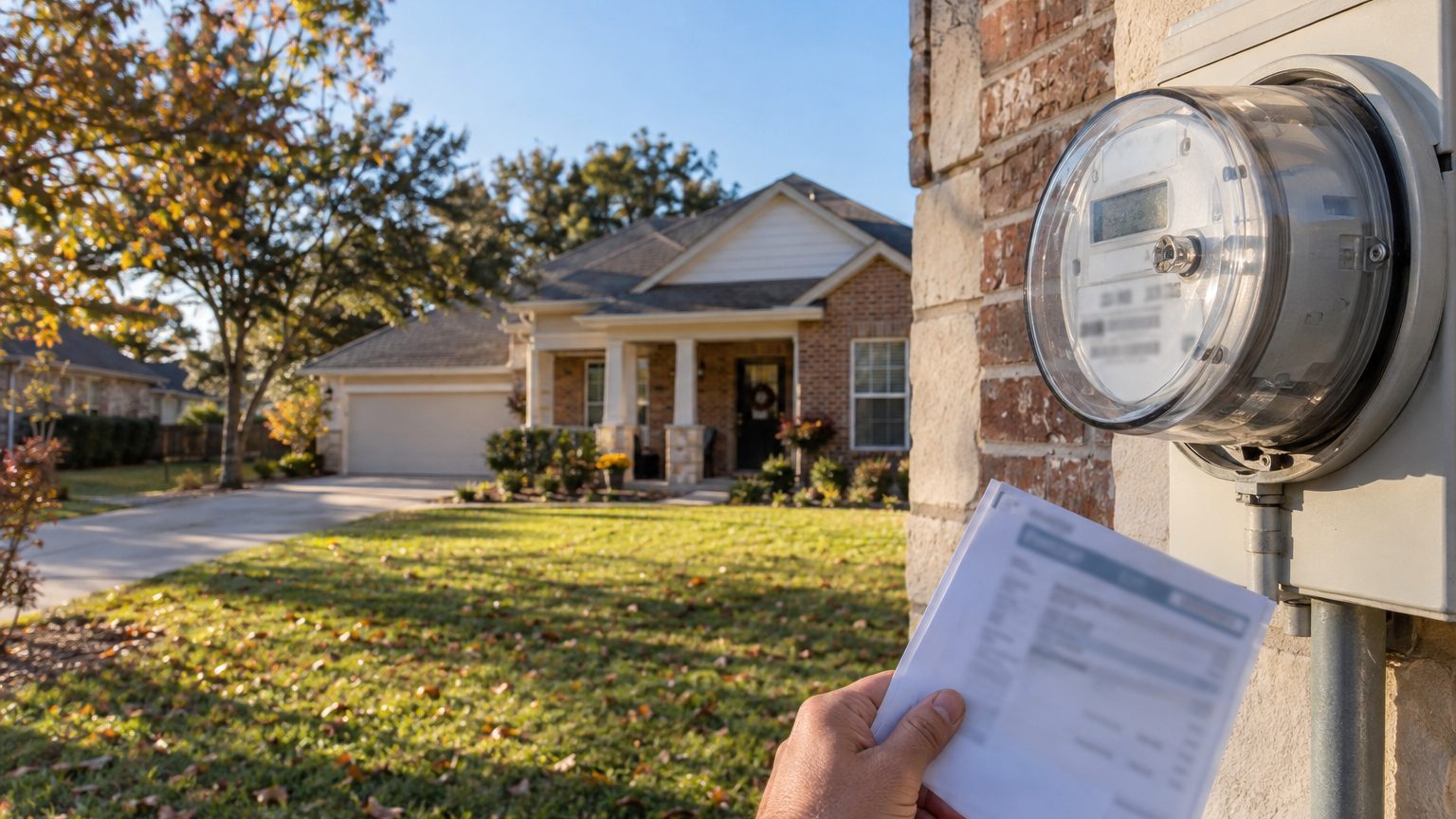

Kansas households pay less each month for electricity than the typical U.S. household, even though they use slightly more of it. The difference comes from what each kilowatt-hour (kWh) costs. The number below is a statewide yearly average, and where a single home lands depends mostly on how it heats.
The average electric bill in Kansas
According to the U.S. Energy Information Administration’s 2024 Average Monthly Bill – Residential (Table 5A, forms EIA-861), the average Kansas residential customer used 876 kWh a month in 2024 at 14.15 cents per kWh, for an average monthly bill of $123.90. The U.S. average that year was 863 kWh at 16.48 cents, for a bill of $142.26.
Against the national figures, the Kansas bill runs $18.36 a month lower. Kansas homes used 13 kWh more per month and paid 2.33 cents less per kWh. Ranked on the average bill among the 50 states and the District of Columbia, Kansas is 36th highest, which is also 16th lowest.
The $123.90 is a statewide average over the whole year, with every utility in the state counted together. It is not the bill a particular household receives. A single winter or summer month can land far above it, depending on how the home is heated and cooled. The sections below show what pushes a bill up or down, and the other Kansas guides cover related energy questions.
Why homes here pay what they pay
A bill is the amount of electricity used multiplied by the price of each unit. In Kansas, price is what pulls the bill down: 14.15 cents per kWh against 16.48 cents nationally. Usage pushes the other way, but only by a little, at 876 kWh against 863 kWh. The lower price outweighs the extra 13 kWh, which is how a state that uses slightly more power ends up with the lower bill.
How a home heats shapes the winter months. The U.S. Energy Information Administration’s Residential Energy Consumption Survey (RECS) 2020 state tables give these shares of Kansas homes by main heating equipment and fuel:
- Furnace: 86% of homes.
- Central heat pump: 6%.
- Natural gas as the heating fuel: 71%.
- Electricity as the heating fuel: 21%.
- Propane: 6%.
- Steam or hot-water boiler: the survey suppressed the estimate as unreliable, so it publishes no figure.
- Fuel oil or kerosene: the survey found too few households to publish a figure.
These are statewide shares from a national survey, not a count for any one county. The 21% of homes that heat with electricity see winter bills well above the yearly average. For the 71% that heat with natural gas, the heating cost shows up on the gas bill, so the electric bill follows a different pattern.
Winter and summer months
Degree days turn a climate into a cost. For every day of the year they add up how far the mean temperature sat below 65 F (heating degree days) or above it (cooling degree days). NOAA NCEI’s U.S. Climate Normals for 1991-2020 list about 4,414 heating degree days a year at Wichita, base 65 F, and about 1,774 cooling degree days.
Heating degree days are the larger of the two, so the heating season is the heavier load on a Kansas home over the year. For a household that heats with electricity, the highest bills of the year most likely fall in the coldest months. A home that heats with natural gas carries that winter load on its gas bill, so its highest electric month is not necessarily a winter one.
Wichita is a single reference city. Other parts of the state can run warmer or colder, and the degree-day totals shift with them.
What lowers the bill
For homes that heat with electricity, heating is the larger seasonal load, so the levers that cut heat loss matter most. Turning the thermostat down while you sleep or are away is the first one, and Does Turning the Thermostat Down Really Save Money covers what to expect from it.
Sealing air leaks comes next. How to Find the Air Leaks in Your House shows where to look, and Weatherstripping and Caulk covers closing them at doors and windows. The Home Insulation guides cover adding insulation after the leaks are sealed.
A heat pump is the electric heating option already installed as the main system in 6% of Kansas homes, according to RECS 2020. Whether it fits depends on the home and on what it heats with today.
Common questions
Is the average electric bill in Kansas above the national average?
No. The 2024 Kansas average bill is $18.36 a month below the U.S. average, because the price per kWh is 2.33 cents lower. Kansas homes used 13 kWh more per month.
Will my own bill match the statewide average?
Probably not in any given month. The figure averages a full year across every utility in the state. A home that heats with electricity sees winter bills well above it.
How many households are behind the Kansas average?
The 2024 figure covers 1,317,095 residential customers.
How cold are Kansas winters in terms of heating demand?
At Wichita, the 1991-2020 normals show about 4,414 heating degree days a year at a base of 65 F. That is the reference-city figure, and it rises or falls with the part of the state.