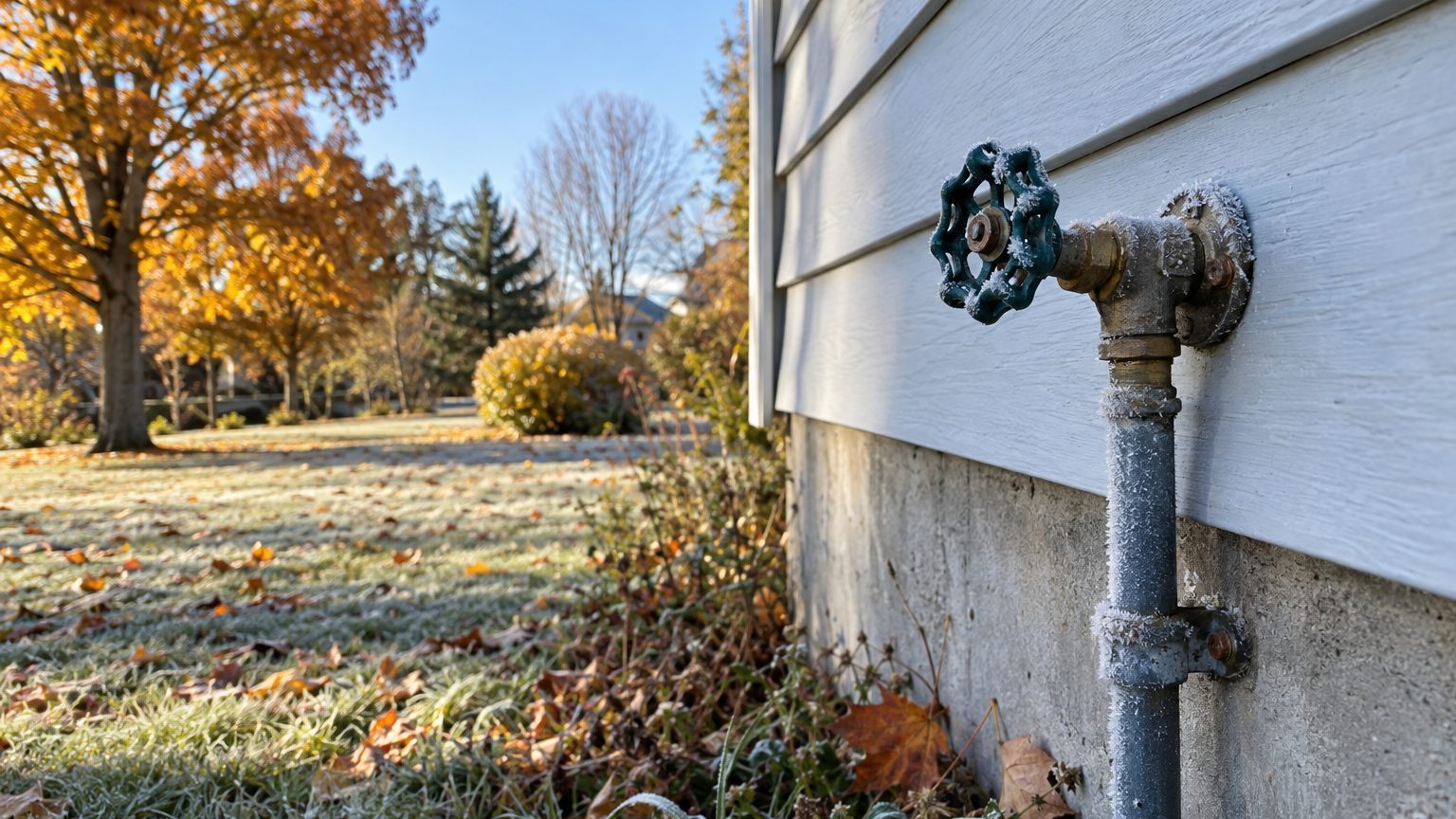

Pipes start to freeze when the air around them drops to about 20°F and stays there for several hours. That is the number most plumbers and insurers cite, and it holds up well in practice. But the temperature outside your house is not the temperature that matters. What counts is how cold it gets inside the wall, the crawlspace, or the cabinet where the pipe actually sits.
The 20-degree rule, and why it misleads
Water freezes at 32°F, yet a pipe rarely bursts the moment the thermometer dips below that. Water inside a pipe is insulated by the pipe walls, by surrounding materials, and by the warmth leaking from your house. It takes sustained cold, usually six hours or more at 20°F or below, for ice to form in a typical exposed line.
Wind changes everything.
A pipe on an exterior wall with even a small gap in the siding can lose heat far faster than the forecast suggests, because moving air strips warmth away from it. A 25°F day with a 20 mph wind can do more damage than a still 15°F night. Homeowners in the South get caught by this more than anyone, since homes in Texas, Georgia, and the Carolinas often run plumbing through uninsulated attics, garages, and outside walls that builders in Minnesota would never have allowed.
The February 2021 Texas freeze showed the scale of the problem. Temperatures fell into the single digits across parts of the state, millions of people lost power, and burst pipes flooded thousands of homes and buildings. Insurance claims ran into the billions of dollars. Much of that damage came from plumbing that had never been designed to see that kind of cold.
The pipes most likely to fail first
Location beats material. A copper line buried in a heated interior wall will outlast a plastic line running along a bare garage wall every single time. Think of your plumbing as having a ranking of vulnerability, and the ranking depends on exposure.
Outdoor spigots and the supply lines feeding them sit at the top. Hose bibs push a short stub of pipe through the exterior wall, and if a hose is still attached, water can be trapped in the faucet body with nowhere to go. Frost-proof sillcocks help, since the shutoff valve sits several inches inside the heated wall, but only if they tilt slightly downward so they drain. A hose left connected defeats the design.
Next come pipes in unheated spaces: crawlspaces, attics, garages, basements with exposed rim joists, and the cabinets along exterior walls, especially under kitchen and bathroom sinks. Sprinkler lines, pool supply lines, and any pipe that runs through a vented crawlspace belong on that list too. Anywhere outside the home’s insulated envelope counts as risky territory.
Burst pipes don’t happen where ice forms. This surprises people.
The rupture usually occurs between the ice blockage and a closed faucet, where trapped water has nowhere to go and pressure spikes. The ice plug itself often stays intact while the pipe wall splits a few inches away. That is why a pipe can look fine when frozen and then flood a room hours later, once the thaw releases water through the crack.
Does pipe material matter?
Somewhat. Copper conducts heat well, so it freezes faster, but it also tolerates a little expansion before it splits. PEX tubing, now common in new construction and remodels, stretches considerably and is far less likely to burst, though fittings can still fail and PEX is not freeze-proof. Rigid PVC and CPVC turn brittle in the cold and are more prone to cracking, while old galvanized steel has less give than either and tends to fail at joints already weakened by corrosion.
What to do before and during a hard freeze
Insulation is the cheapest protection available. Foam pipe sleeves cost a few dollars per six-foot length at any hardware store and slip over exposed lines in minutes. Seal air leaks around where pipes enter the house, too, using caulk or spray foam, because a draft hitting a bare pipe is the classic failure point.
When the forecast drops into the low 20s or teens, a few small habits go a long way:
- Open cabinet doors under sinks on exterior walls so room heat reaches the pipes.
- Let a faucet drip, cold and hot, on the lines most exposed to the weather.
- Keep the thermostat at 55°F or higher, even if you leave town.
- Disconnect and drain garden hoses, and shut off interior valves feeding outdoor spigots.
The drip works because moving water is harder to freeze, and more importantly because an open faucet relieves pressure if ice does form. A trickle about the width of a pencil lead is plenty. The few extra gallons on your water bill cost far less than the average burst-pipe claim, which commonly runs into five figures once drywall, flooring, and mitigation are tallied.
Every household should also know where the main shutoff valve is before an emergency, not during one. Find it, label it, and make sure it turns. A stuck valve in the middle of a flood is a bad time to learn that it has not moved since 1998.
If a pipe freezes anyway
Turn on the faucet. If only a trickle comes out, or nothing at all, suspect a frozen line and leave the tap open so water can flow as the ice melts.
Apply gentle heat to the section of pipe, starting at the faucet end and working back toward the blockage. A hair dryer, a heating pad wrapped around the pipe, or towels soaked in hot water all work. Never use a propane torch or open flame. Fires from thawing pipes with torches are a well-documented cause of house fires, and the heat can also melt solder joints or scorch framing hidden in the wall.
If you can’t find the frozen spot, can’t reach it, or the pipe has already split, shut off the main valve and call a licensed plumber. Water damage spreads quickly once pressure returns. Many homeowners policies cover sudden burst-pipe damage, though they often deny claims when a house was left unheated or the owner ignored reasonable precautions, so documenting the steps you took matters.
One last fact for anyone who has just had a scare: a pipe that froze once is a pipe that will freeze again, because the weak spot is the location, not bad luck. Rerouting that line, adding insulation, or installing a small heat cable rated for pipes (the kind with a built-in thermostat) costs a fraction of a second repair.