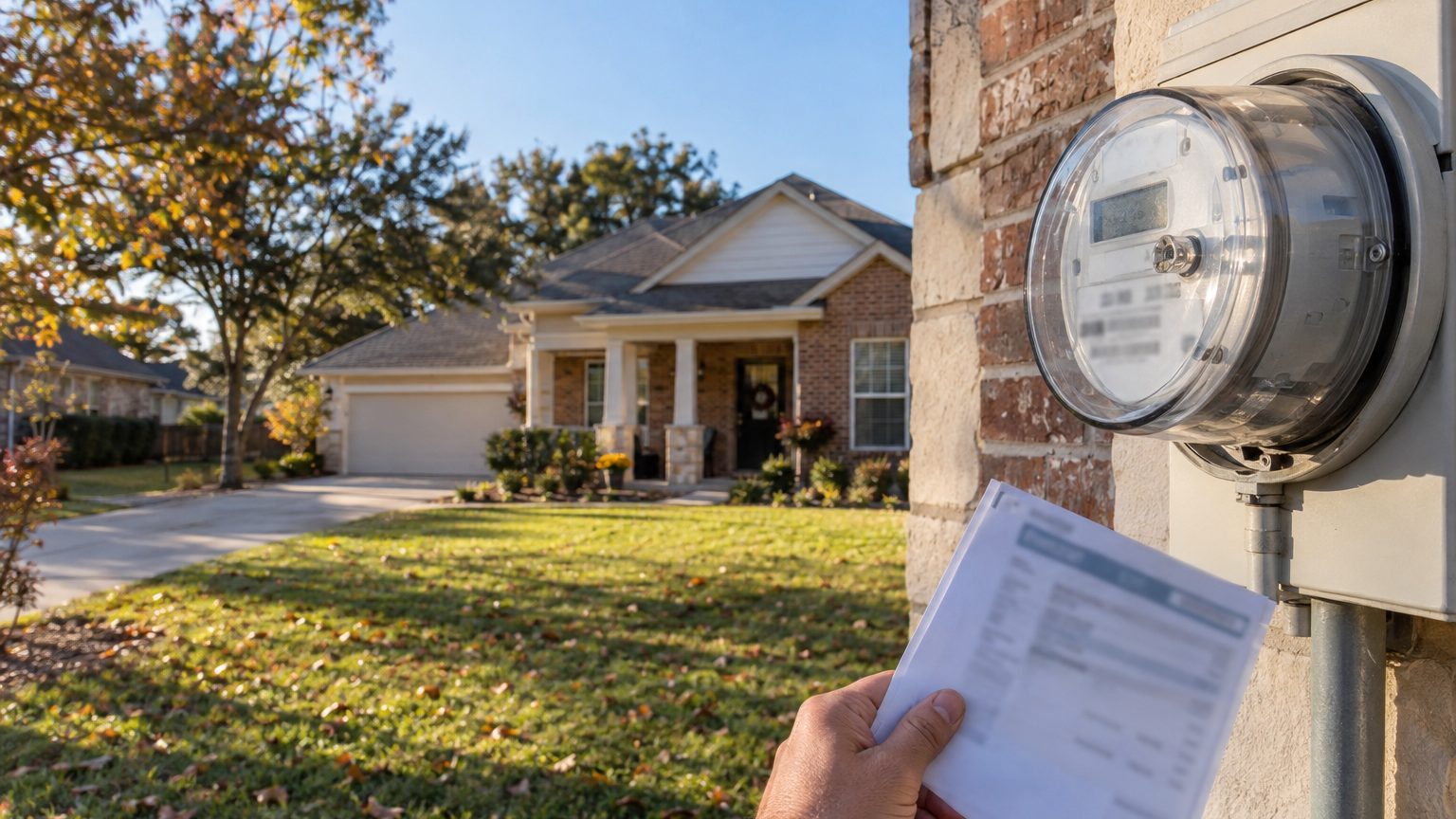

A typical Maryland household paid $165.87 a month for electricity in 2024, according to the U.S. Energy Information Administration. That is a statewide average across the whole year and every utility, and it sits above the national average. Where your own bill lands depends on how many kilowatt-hours your home uses, what the utility charges per kilowatt-hour, and whether you heat with electricity.
The average electric bill in Maryland
In 2024, the average residential electricity customer in Maryland used 929 kWh a month at 17.86 cents per kWh, for an average monthly bill of $165.87. Those are the U.S. Energy Information Administration’s figures (Table 5A, from forms EIA-861), covering 2,451,753 residential customers. A kilowatt-hour (kWh) is the unit your utility bills you in: one kilowatt of power running for one hour.
The U.S. average that year was 863 kWh a month at 16.48 cents per kWh, or $142.26. Ranked on the average bill among the 50 states and the District of Columbia, Maryland comes in 5th highest (47th lowest).
This is a yearly average for the whole state, with every utility pooled together. It is not a bill any one household received. A small apartment and a large detached house with a pool both feed into the same number, and so do a mild October and a hard January.
The bill follows from two inputs, the kWh used and the price per kWh, and your statement lists both. Compare each one separately with the state averages above. If your kWh is close to the average but your bill is higher, the price per kWh explains it. If your price matches but your bill is higher, the usage does.
Why homes here pay what they pay
A bill is usage times price, and in Maryland both sit above the U.S. figures. The average Maryland customer used 66 kWh a month more than the national average, and paid 1.38 cents more per kWh. Together they add up to the $23.61 a month gap between Maryland’s bill and the national one. Neither factor alone accounts for it, so lowering usage helps but does not close the gap by itself.
How a home heats shapes the usage side. The Energy Information Administration’s Residential Energy Consumption Survey (RECS 2020) gives the state’s main heating equipment: a furnace in 64% of homes, a central heat pump in 19%, and a steam or hot-water boiler in 7%. By main heating fuel, the split is:
- Natural gas: 49%
- Electricity: 41%
- Fuel oil or kerosene: 7%
The survey does not publish a reliable estimate for propane, because the figure was suppressed as unreliable. That is a gap in the survey, and it does not mean no one in Maryland heats with propane.
For the homes in the electricity group, winter bills run well above the yearly average, since the heating load lands on the electric meter. A home heated with natural gas or fuel oil buys that heat from another supplier, so its electric bill follows a different seasonal curve. These are state shares from a national survey. They describe Maryland as a whole, not your street or your county.
Winter and summer months
The reference climate figures come from the Baltimore/Washington International Airport station, using NOAA’s U.S. Climate Normals for 1991-2020. Heating degree days add up, day by day, how far the average temperature sat below 65°F, and cooling degree days do the same above 65°F. At this station the year totals about 4,484 heating degree days and about 1,322 cooling degree days.
Heating degree days far outnumber cooling degree days, so winter is the longer and heavier season for energy use here. For a home that heats with electricity, whether a heat pump or resistance heat, the highest bills of the year most likely fall in the cold months. That is the group of 41% of homes described above.
A home that heats with natural gas or fuel oil keeps most of that winter load off its electric bill. For those households the electric peaks track the warm months more closely, when the cooling degree days accumulate. Your two or three highest months therefore tell you which group you belong to. If they are December through February, your heating runs on electricity. If they fall in summer, cooling is driving the electric meter.
A winter or summer month can land far above the 929 kWh average, depending on the home. Season, heating fuel and house size move your own number more than any statewide figure.
What lowers the bill
For a home that heats with electricity, the winter load is the place to start. Turning the thermostat down overnight and while you are away is the simplest lever, and the question of how much it actually saves is covered in Does Turning the Thermostat Down Really Save Money.
The second lever is sealing air leaks. Locating them comes first, and How to Find the Air Leaks in Your House walks through it. Gaps around doors and windows can then be closed with Weatherstripping and Caulk. Attic, wall and floor insulation holds the heat once the leaks are closed, and the options are laid out under Home Insulation.
The heat pump question applies mostly to homes now on a furnace or boiler. A central heat pump already heats a share of Maryland homes, so the technology is in use across the state. Whether a swap makes sense depends on the equipment you have now and the fuel it burns, which is why the equipment shares above matter. More on all of this is collected in the Maryland guides.
Common questions
These answers cover the points readers most often get wrong when they compare their own statement with the state number.
Does the average include every utility in the state?
Yes. The 2024 average pools all utilities serving residential customers, 2,451,753 accounts in all, so it does not match what any single company charges.
Should my winter bill match the average?
Not necessarily. The average is spread over twelve months, and a home that heats with electricity sees winter months well above it. A home that heats with gas or oil can see a flatter pattern.
Do most Maryland homes heat with electricity?
No. Natural gas is the leading main heating fuel in RECS 2020, and electricity comes second. The survey describes the state as a whole, so your neighborhood may differ.
Do the degree-day numbers apply to the whole state?
They come from one station near Baltimore. Counties at higher elevation in western Maryland run colder, so their heating season is longer. Your county’s extension office can tell you how your area compares.