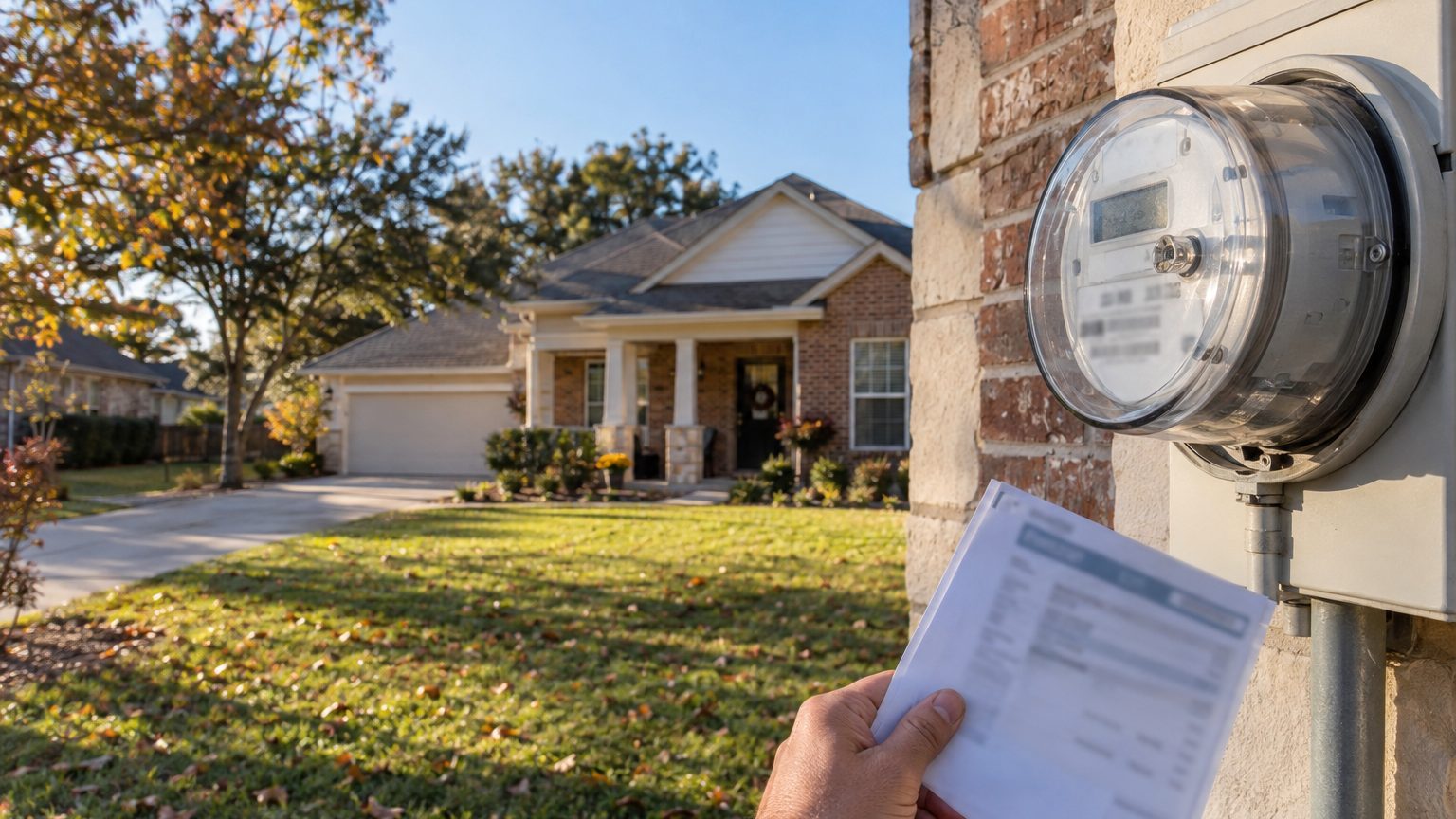

Hawaii has the highest average residential electric bill among the 50 states and the District of Columbia, according to 2024 data from the U.S. Energy Information Administration. Hawaii households use less electricity than the typical American home, so the high bill comes from the price of each kilowatt-hour. The sections below give the numbers, what shapes a bill in the islands’ climate, and the steps that lower it. More local reading sits in the Hawaii guides.
The average electric bill in Hawaii
In 2024 the average residential customer in Hawaii used 495 kWh a month at 42.86 cents per kWh, for an average monthly bill of $212.12. The U.S. average that year was 863 kWh at 16.48 cents per kWh, or $142.26 a month. A kilowatt-hour (kWh) is the unit on your meter: 1,000 watts running for one hour.
Ranked on the average bill among the 50 states and the District of Columbia, Hawaii comes 1st highest (51st lowest). The figures come from Table 5A of the U.S. Energy Information Administration’s 2024 Average Monthly Bill – Residential, built from the EIA-861 survey forms, which count 446,512 residential customers in the state. The gap with the national average is $69.86 a month on the bill.
This is a statewide yearly average with every utility counted together. A small apartment and a large house sit inside the same number, and so do a January bill and a July bill. The figure tells you where Hawaii sits among the states. Your own bill depends on the home you live in, how it is heated and cooled, and the month you read.
Why homes here pay what they pay
A bill is the kWh a home uses times the price of each one. Hawaii customers used 368 fewer kWh a month than the U.S. average, which pulls the bill down. They also paid 26.38 more cents on every kWh, which pulls it up much harder. Price wins by a wide margin, since the state still lands at the top of the national ranking.
For a household, that makes every kWh avoided worth more here than in a state paying the national price. A habit or an upgrade that trims a modest number of kWh a month still shows up on the bill.
Heating adds a second piece. In the Residential Energy Consumption Survey (RECS) 2020, run by the U.S. Energy Information Administration, electricity is the main heating fuel in 5% of Hawaii homes. The survey suppressed its estimates for furnaces, central heat pumps, steam or hot-water boilers, natural gas and propane as unreliable, and too few households reported fuel oil or kerosene to publish a figure. None of those blanks means that nobody in the state heats that way. These are state shares from a national survey and do not describe a particular county or street.
A home that heats with electricity can see winter bills above the yearly average, because the heating comes on top of everything else drawing power. A home that does not heat with electricity has no such winter bump. The heating and cooling guides cover the equipment choices behind those two situations.
Winter and summer months
Degree days turn weather into a cost. A heating degree day counts how far a day’s mean temperature sits below 65 F, a cooling degree day counts how far it sits above 65 F, and the totals add up across the year. At Honolulu International Airport, NOAA NCEI’s U.S. Climate Normals 1991-2020 show about 0 heating degree days a year and about 4,767 cooling degree days.
At that reference station, all of the weather-driven demand sits on the cooling side. A home near Honolulu has no winter heating season to push a bill up, so its highest months follow the warm stretches of the year and its lowest months follow the mild ones. Twice the degree days means roughly twice the energy for the same house, which is why a total this large on the cooling side shapes the swings between a low month and a high month.
Honolulu is one station. A mountain county in the same state can run far colder, and a home at elevation that heats with electricity can see its highest bills in the cold months instead. How long that cold season lasts depends on where the house sits, and the heating season guide explains how to read it for your own location.
The 2024 average bill blends all of this together. Homes that cool heavily and homes that heat with electricity both land inside it, and each sees its peak in a different part of the year.
What lowers the bill
Against the 2024 statewide average, each kWh trimmed is worth more here than in a state paying the U.S. average price. The levers are the same ones that apply anywhere, and each one works on kilowatt-hours. A home that heats with electricity can start at the thermostat, and Does Turning the Thermostat Down Really Save Money covers how a setback works.
Air leaks apply to every home. How to Find the Air Leaks in Your House shows how to locate them, and Weatherstripping and Caulk covers closing the gaps around doors and windows. The wider picture of what goes into walls, attics and floors sits under Home Insulation.
A home that needs new heating equipment faces the heat pump question. The comparison with a gas furnace is laid out in heat pump vs. gas furnace, and it applies to a home that heats at all, such as one at higher elevation.
Common questions
These answers cover the points readers ask about most when they compare their bill with the state average.
Why is the bill so high when Hawaii homes use less electricity than the national average? Each kWh costs far more here than the U.S. price, and that price gap outweighs the lower use. The state ranks 1st highest on the average bill among the 50 states and the District of Columbia.
Do Hawaii homes pay for winter heating? At Honolulu International Airport the climate normals show about 0 heating degree days a year. Electricity is the main heating fuel in 5% of Hawaii homes in RECS 2020, and the survey gives no published share for most other fuels.
Can my own month run above the statewide average? Yes. The average blends every home and every month of 2024 across all utilities, so a single month can sit well above it depending on how the home heats and cools.
Where should I start to lower a bill? Start with air leaks, since finding and sealing them applies to any home whatever the heating equipment. Insulation and the thermostat follow, and each of them links to its own guide above.