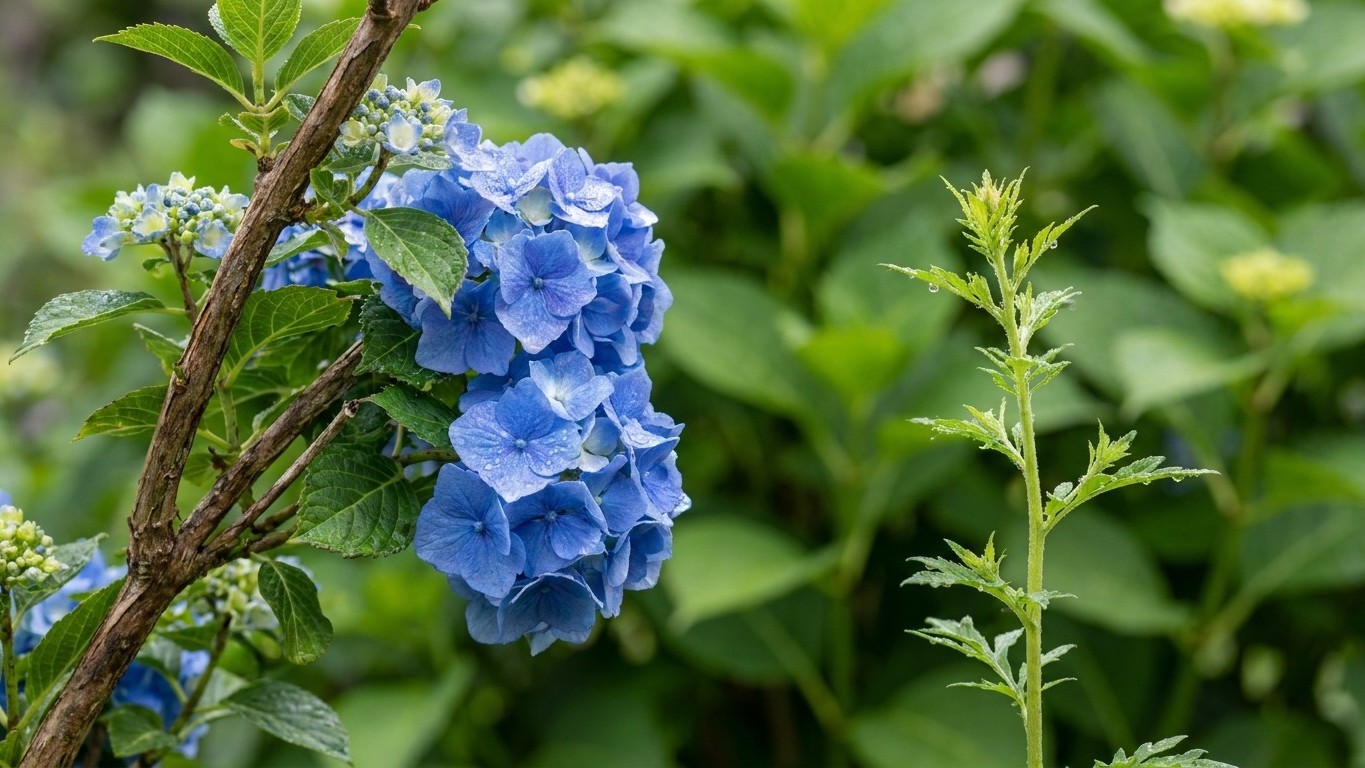

Hydrangeas grow well in Utah when the type fits the site. Panicle and smooth hydrangeas shrug off cold winters and bloom dependably. Bigleaf types need shelter, afternoon shade and some help with soil chemistry. Plant in spring after frost danger passes, or in early fall, and set the shrub in rich, mulched soil with deep, regular watering. Flower color depends on soil pH and variety, and alkaline soil pushes bigleaf blooms toward pink.
When to plant Hydrangeas in Utah

At the Salt Lake City reference station, the last spring frost falls between April 12 and April 29, and the first fall frost between October 18 and October 29 (NOAA NCEI 1991-2020 Climate Normals). That leaves roughly six months between the mean last spring frost and the mean first fall frost. Salt Lake sits in a mild valley, though. Most of Utah is higher and colder, so the mountain towns, Cache Valley and the high basins run later, sometimes by weeks. Southern Utah is warmer and starts earlier. Treat the Salt Lake dates as a starting point and adjust for your own elevation.
What is the best time to plant a hydrangea in spring?
Spring planting works best for most gardeners. In the Salt Lake valley, the planting window runs from late April through May, once the soil is workable and hard freezes have stopped. At higher elevations, wait until late May or even early June. A simple test: when the ten-day forecast shows overnight lows staying above freezing, the shrub is safe in the ground.
The frost date matters more for hydrangeas than for many shrubs. Bigleaf types leaf out early, and a freeze after that kills the tender new growth and any flower buds formed last summer. Garden centers often have plants in pots by early April. Buy them if you like, but keep them in a sheltered spot and cover them on freezing nights until planting time.
Can you start hydrangeas from seed in Utah?
You can, but few people do. Hydrangea seed is tiny and slow, and named varieties do not come true from seed. Plants take years to bloom. Nursery shrubs or rooted cuttings are the practical routes.
If you want to propagate a shrub you already own, take softwood cuttings from new growth in early summer, root them in a moist, well-drained mix, and keep them in bright shade. Rooted cuttings overwinter best in a cool, unheated garage or a protected spot with the pots mulched, then go out the following spring after the last frost.
Hardening off applies to anything raised indoors or bought from a heated greenhouse. Over seven to ten days, move the plant outside for a few hours of shade, then lengthen the time and add morning sun. Utah’s thin, bright air burns soft leaves fast, and a plant moved straight from a greenhouse bench to a sunny bed often scorches within a day. Transplant on a cool, overcast day if you can.
Is fall a good time to plant hydrangeas in Utah?
Early fall works for panicle and smooth hydrangeas. Aim for early September to early October in the valleys, which gives roots about six weeks to settle before the ground freezes. First fall frost at the reference station arrives October 18 to 29, and the soil stays workable for a while after that. Spread a thick layer of mulch after planting and keep watering until the ground freezes. Bigleaf hydrangeas are safer planted in spring, because small plants heaved by winter freeze-thaw cycles rarely recover.
Soil and site preparation
Light matters more than anything else in Utah. The sun here is intense and the air is dry, so most hydrangeas want morning sun and some shade after about 1 or 2 p.m. Panicle hydrangeas tolerate the most sun and bloom best with six or more hours. Bigleaf and oakleaf types burn and wilt in hot afternoon exposure. An east-facing wall or the north side of a tree-shaded bed is usually ideal. In southern Utah, shift every hydrangea toward more shade.
Soil comes next. Hydrangeas like rich, loose, well-drained ground that holds moisture without staying soggy. Heavy clay stays wet, suffocating roots in winter. Fast-draining sandy or gravelly soil dries out between waterings. Across much of the state, garden soil also leans alkaline, which affects color and can cause yellowing. A soil test through your county extension office tells you pH and organic matter, and it costs little compared with replacing a shrub.
Start prep three to four weeks before planting. Loosen the bed to about 12 inches and work in two to three inches of compost. Compost helps both clay and sand by improving structure and water holding. Do not try to correct pH heavily at planting time. Sulfur takes months to work, so if you want to acidify, apply it in the fall before spring planting, based on your test results.
On planting day, dig a hole about twice as wide as the root ball and no deeper. Set the crown level with the soil surface, backfill with the native soil and compost mixture, and water in thoroughly. Space panicle hydrangeas 5 to 8 feet apart, depending on the variety, and smooth and bigleaf types 3 to 5 feet apart. Crowded shrubs share limited water, and in a dry state that shows up quickly as wilt. Finish with a two- to three-inch layer of wood-chip mulch, kept a few inches back from the stems.
Varieties that suit Utah
Utah’s cold winters and late spring freezes make the type of wood your hydrangea blooms on the most important trait. Panicle hydrangeas (Hydrangea paniculata) and smooth hydrangeas (Hydrangea arborescens) flower on new growth. A bad winter can kill the top of the plant, and it still blooms that summer. Bigleaf hydrangeas (Hydrangea macrophylla) form flower buds on old wood, so a hard winter or a late freeze can mean green leaves and no flowers. Reblooming bigleaf types soften that risk by also flowering on new growth, but they still need protection.
| Type | Widely available examples | Blooms on | Sun and cold notes |
|---|---|---|---|
| Panicle | Limelight, Little Lime, Bobo, Vanilla Strawberry, Quick Fire | New wood | Hardiest and most sun tolerant; the most reliable choice at higher elevations |
| Smooth | Annabelle, Incrediball, Invincibelle Spirit II | New wood | Cold hardy; prefers morning sun and consistent moisture; stems are stronger on Incrediball |
| Bigleaf | Endless Summer series | Old and new wood | Needs afternoon shade and winter protection; color changes with pH |
| Oakleaf | Snow Queen | Old wood | Handles heat and drier shade better than bigleaf; rated less cold hardy than panicle types |
Among panicles, Limelight is a large shrub with lime-green blooms that age to pink, and it suits a back-of-border spot. Little Lime and Bobo stay compact, which helps in small yards. Quick Fire opens early and turns rosy-red by late summer. Annabelle is the classic white smooth hydrangea, though its heavy blooms flop in rain or irrigation spray. Incrediball has sturdier stems that hold the big flower heads upright.
Among bigleaf plants, the Endless Summer series is the best known reblooming line and the most practical bigleaf for northern Utah gardens. It is still worth planting only where it gets shelter from winter wind. Disease resistance varies, but powdery mildew and leaf spots rarely derail any of these types in the state’s dry air. Heat tolerance is the other trait to watch, and panicle hydrangeas handle summer heat in St. George-type climates better than the others.
If you garden near a neighboring state with a similar climate, the regional guide for Growing Hydrangeas in Idaho: Types, Colour and Winter covers closely related cold-winter conditions. For the full overview of the genus, see How to Grow Hydrangeas: The Complete Guide.
What to plant alongside
Good neighbors for hydrangeas share their need for moisture and part shade. Hostas, heucheras, ferns, astilbe and epimedium cover the soil at the base of the shrub, keep it cooler and cut evaporation. Japanese forest grass and hellebores fill the same role with finer texture. A ground layer shades the roots in the way mulch does, so it helps most in the hottest part of the Utah summer. Spring bulbs such as daffodils work well too. They bloom and fade before hydrangeas leaf out, and deer and rodents tend to leave them alone.
Taller companions can supply the afternoon shade that bigleaf and oakleaf types need. A small, deep-rooted tree such as a serviceberry or redbud on the west side casts dappled shade without strangling the bed. Boxwood and other evergreen shrubs give a winter backdrop when hydrangea stems are bare. Bees visit panicle and lacecap flowers readily, so a hydrangea bed near flowering perennials draws pollinators. Mophead types carry mostly sterile florets and offer little nectar.
Some plants compete or clash. Shallow-rooted maples, birches and large lawn trees pull moisture and nutrients from the same top foot of soil. Black walnut releases juglone, which stunts many garden plants, so keep hydrangeas well outside the drip line. Lawn grass planted right up to the stems competes for water and exposes the shrub to herbicide drift. Lavender, sagebrush, yarrow and other plants adapted to dry, lean soil need the opposite watering schedule. If you irrigate a hydrangea enough to keep it happy, they rot.
Watering, feeding and support
Hydrangea means “water vessel,” and the plants live up to it in Utah’s dry climate. A newly planted shrub needs deep watering two or three times a week for the first few weeks, then once or twice a week through the first summer. Established plants usually do best with a deep soak once or twice a week in summer heat. Slow watering reaches 10 to 12 inches down, where roots can find it. Frequent shallow sprinkling keeps roots near the surface, and they then dry out fast. Drip irrigation works well, because wet leaves in strong sun can scorch and wet foliage invites disease. If your yard is on a secondary irrigation system with assigned days, a soaker hose or timer on those days saves the shrub.
Mulch earns its place here. Two to three inches of wood chips or shredded bark slow evaporation, hold soil temperature steady and suppress weeds. Renew it each spring. Keep it a few inches away from the stems to prevent rot.
Feed lightly. A slow-release, balanced fertilizer applied once as growth starts in spring is enough for most plants. Add a second light dose in early summer for heavy bloomers if the leaves look pale. Too much nitrogen produces lush leaves and few flowers, and fertilizer applied in late summer pushes soft growth that freezes before it hardens. Where leaves are yellow with green veins, the soil is likely too alkaline for the shrub to take up iron. A chelated iron product helps in the short term, and acidifying the soil takes longer.
How do you support and prune hydrangeas?
Stems on Annabelle and other heavy-headed types flop after rain or irrigation. A simple peony ring or a few stakes with soft ties set up in spring holds them up. Choose sturdier varieties like Incrediball to avoid the job.
Pruning depends on the type. Cut panicle hydrangeas back by about a third in late winter or very early spring, before growth starts. Cut smooth hydrangeas to 6 to 12 inches above the ground in the same window, or leave a framework of taller stems for a larger shrub. For bigleaf and oakleaf types, remove only dead wood after leaves emerge in late spring, and deadhead right after bloom. Cutting back a bigleaf in fall or winter removes next summer’s flower buds.
Common problems

Most hydrangea trouble in Utah traces back to water, light, soil pH or winter damage. The shrub tells you which if you read the symptom.
No flowers is the complaint heard most often. On bigleaf types, a hard winter or a late freeze after leaf-out kills the buds on old wood. Too much shade and heavy nitrogen feeding produce leaves instead of flowers, and pruning at the wrong time removes the buds. Shift to a panicle or smooth variety if the problem repeats, or protect the buds over winter as described below.
Brown, crispy leaf edges point to sun scorch, dry soil, or both. Move the watering deeper, add mulch, and consider shade cloth in the first summer after planting. Persistent scorch on a bigleaf in a west-facing spot means the site is wrong.
Yellow leaves with dark green veins signal iron chlorosis, common where the soil is alkaline. A pH test confirms it. Chelated iron gives a quick response, and sulfur and organic matter work slowly. Yellowing across the whole leaf, including the veins, usually means soggy soil or too little nitrogen.
White powdery coating on leaves is powdery mildew. It shows up where plants are crowded, shaded and humid at the leaf level, even in a dry climate. Thin the stems, space plants more widely, and water at the base. Fungicide is rarely needed.
Which pests bother hydrangeas in Utah?
The Utah State University Extension vegetable insects fact sheet series names aphids, spider mites, and slugs and snails among the main pests of home gardens, and all three visit hydrangeas. Pressure varies within the state, and your county extension office can identify what you have.
Aphids cluster on tender new growth and leave sticky residue. A strong spray of water knocks them off, and insecticidal soap handles heavier infestations. Spider mites favor hot, dusty, dry conditions and leave fine stippling on the leaves, sometimes with webbing underneath. Rinse leaves with water and keep plants from drought stress. Slugs and snails chew ragged holes in leaves and leave slime trails, particularly in beds under drip irrigation or mulch. Pick them off at dusk or use an iron phosphate bait.
Wilting that persists despite moist soil, or stems that die back with no frost to blame, may be root rot from poor drainage. Dig up the shrub, check roots for brown mush, and replant on a mound or in a better-drained spot.
Harvest and end of season
Hydrangeas are harvested as cut flowers. For fresh bouquets, cut stems in the cool of the morning once the blooms are fully open and the florets feel firm. Strip the lower leaves and put the stems in water right away. A fresh cut or a dip of the stem end in hot water helps them take up water. For dry arrangements, wait until late summer or early fall, when the flower heads turn papery and shift to antique tones of green, rose and burgundy, then cut and hang them upside down in a dry, shaded spot for two to three weeks. Dried heads keep for a year or more when stored out of humid air and strong light.
As fall approaches, stop fertilizing by midsummer so that new growth hardens. The first fall frost at the Salt Lake reference station arrives between October 18 and October 29, and sooner at higher elevations. A frost that browns the foliage is no threat to a dormant plant, but a hard freeze early in the season can catch the buds of bigleaf types unprepared. If a freeze threatens in September or early October, cover plants overnight with a sheet or burlap.
Water the bed deeply before the ground freezes. Utah winters are dry, and a hydrangea with dry roots suffers more in cold. Once leaves drop, mound mulch or shredded leaves 8 to 12 inches deep over the crown of bigleaf types. In windy sites, a wire cage stuffed with leaves, wrapped in burlap, protects the stems and flower buds. Panicle and smooth hydrangeas need only a standard mulch layer, and the dried flower heads add winter interest. Hydrangeas in pots are better moved into an unheated garage than left outdoors, since roots in containers freeze much harder than roots in the ground.
Gardeners elsewhere face similar winter choices, and the guides to Growing Hydrangeas in New York: Types, Colour and Winter and Growing Hydrangeas in Massachusetts: Types, Colour and Winter show how cold-climate gardeners handle them. More state-level advice is gathered in the Utah guides.
Local help
County dates, elevations and soils vary a great deal across the state. Utah State University Extension runs county offices that offer soil testing, help with plant and pest identification, and advice tuned to your valley or mountain town. Contact your county office before you buy shrubs in bulk or try to change your soil pH.
Common questions
Can hydrangeas survive Utah winters?
Yes, especially panicle and smooth types, which bloom on new wood and recover even after tops die back. Bigleaf and oakleaf types survive in many valleys but often lose flower buds without protection. Mulch the crown, shelter the plant from wind, and water before the ground freezes.
Why won’t my hydrangea turn blue in Utah?
Blue needs acidic soil, roughly pH 5.5 or lower, plus available aluminum. Alkaline soil across much of the state keeps bigleaf flowers pink or purple. Container growing in an acidic mix is the easiest route to blue. White varieties and panicle types do not change color with pH.
Do hydrangeas grow in full sun in Utah?
Panicle hydrangeas do, if they get regular water. Smooth hydrangeas manage best with morning sun. Bigleaf and oakleaf types need shade from early afternoon on, and the strong, dry sun scorches them otherwise.
When should I prune hydrangeas in Utah?
Prune panicle and smooth types in late winter or early spring before growth begins. Bigleaf and oakleaf types set buds on old wood, so remove only dead stems in late spring and deadhead right after flowering.
How much water does a hydrangea need in a Utah summer?
Established shrubs generally need a deep soak once or twice a week in summer heat, with mulch to hold moisture. New plants need water two or three times weekly for the first few weeks. Check the soil two inches down before watering, because afternoon wilting from heat can occur even when the soil is moist.