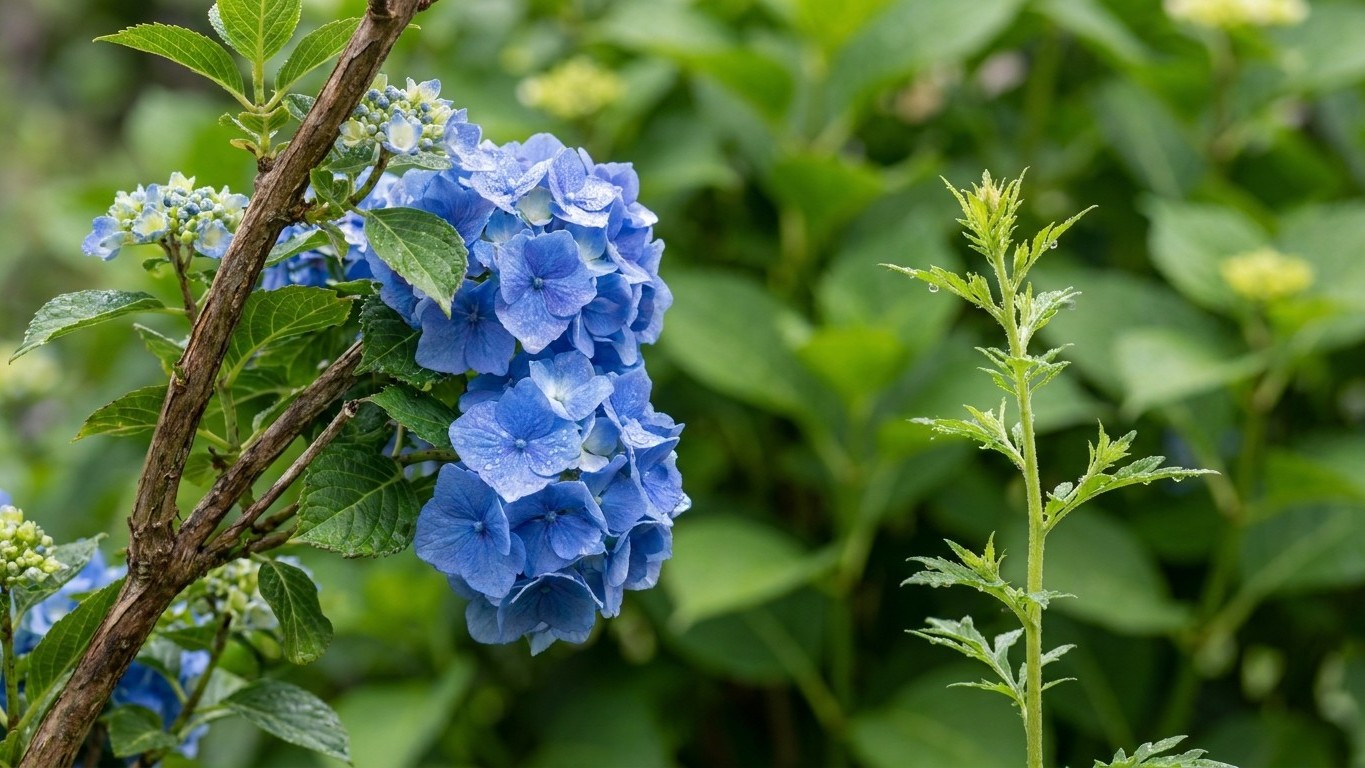

Hydrangeas can grow in Nunavut, but mostly in containers, and flowers are never a sure thing. The reference station, Rankin Inlet A, averages 85 frost-free days, which is a short runway for a shrub that normally spends years building a framework of woody stems. Your best odds come from hydrangeas that bloom on new growth, a sheltered spot out of the wind, and a cold, protected place to spend the winter.
When to plant Hydrangeas in Nunavut

The planting window opens around June 19. That is the average last spring frost at Rankin Inlet A (climate ID 2303401), taken from Environment and Climate Change Canada’s Canadian Climate Normals for 1981-2010. Treat it as the middle of a window, not a safe date. In one year out of two, the last frost falls later than June 19, so a plant set out on that day has roughly even odds of meeting a freeze.
That station sits on the Hudson Bay coast, and Nunavut is a territory, not a single climate. Baffin Island communities, the High Arctic and inland sites each run on their own calendar. Expect the same ballpark or later, and watch your own thermometer. Canadian normals cover 1981-2010, while the US figures use 1991-2020. If you are comparing against the Growing Hydrangeas in Delaware: Types, Colour and Winter page, the two sets of dates are not strictly like for like. Gardeners next door can compare with Growing Hydrangeas in Northwest Territories: Types, Colour and Winter.
Starting indoors
Seed is the slow road. Hydrangeas grown from seed usually take several seasons to flower, so seed will not give you blooms this summer. Most northern growers start with a small nursery plant or a rooted cutting, and wake it up indoors before the outdoor window opens. Working back from June 19:
- Seed sown indoors with a 12-week head start: about March 27 (for foliage practice, not summer flowers).
- Dormant plant or rooted cutting brought into light and warmth, 8 weeks ahead: about April 24.
- The same plant with a 6-week lead: about May 8.
- Hardening off begins 10 days before transplanting: about June 9.
Change the number of weeks to suit your light and space, but keep the method: pick the outdoor date, then subtract. A bright window or a grow light matters more than a heat mat. Leggy, pale shoots from a dim windowsill will scorch the first day outside.
Hardening off and transplanting
Hardening off means giving the plant a week to ten days of gradual outdoor exposure. Start with an hour or two in shade out of the wind, add time and sun each day, and bring it in on cold nights. Wind is the thing to respect in Nunavut, because it shreds soft indoor leaves faster than cold does.
Transplant on or after June 19, or hold the pot a week longer if the forecast shows near-freezing nights. Keep frost cloth or a few upturned buckets on hand for the first fortnight. Waiting costs you days of growth, but a frozen shoot costs more.
Soil and site preparation
Start with the site, because it does more than any amendment. Pick a spot that gets morning and midday sun with a wall, fence or building blocking the prevailing wind. A south or east face also holds heat overnight. Panicle and smooth hydrangeas tolerate full sun when roots stay moist. Bigleaf types scorch more readily and appreciate a little afternoon shade where summers allow it.
Soil and drainage
Native ground in much of Nunavut is thin, gravelly or rocky, cold, and underlain by permafrost. Digging a hole in it is rarely worthwhile. Raised beds at least 10 to 12 inches deep, or large containers (18 inches across is a sensible minimum), let you build the soil yourself. A mix of bagged topsoil or potting mix, finished compost and some coarse material for drainage suits hydrangeas, which want steady moisture but hate sitting in water. A basic pH and nutrient test is cheap and worth doing.
The weeks before planting
Build the bed or fill the pots a few weeks ahead so the mix settles and warms. Work in compost 3 to 4 weeks before planting, and leave fertilizer until the plant is in. If your ground is still frozen or soggy in early June, check it with a probe or a stiff wire before you plan around it. Pots and raised beds thaw and warm much sooner than the surrounding tundra, which is a quiet argument for using them.
Spacing depends on the type. A panicle or smooth hydrangea in a bed wants about 3 to 4 feet to itself for airflow, and compact types can sit a little closer. In containers, give each plant its own pot rather than crowding two into one. Place heavy pots where you want them before filling, since a big pot of wet soil is hard to move. Where weather and soil permit, the How to Grow Hydrangeas: The Complete Guide covers the general principles in more depth.
Varieties that suit Nunavut
The trait that outranks everything else is whether a hydrangea blooms on new wood or old wood. Old-wood bloomers set next year’s flower buds in late summer on stems that survive winter. In Nunavut those stems often die back to the soil line or the snow line, and the buds go with them. New-wood bloomers push fresh stems each spring and flower on that growth, so winter dieback costs you size, not flowers. That makes panicle (Hydrangea paniculata) and smooth (Hydrangea arborescens) types the sensible bet.
When choosing a variety, look for “early blooming” habit, compact size, and sturdy stems.
| Variety | Type | Blooms on | Flower colour | Good for |
|---|---|---|---|---|
| Annabelle | Smooth | New wood | White | Dependable regrowth after dieback |
| Incrediball | Smooth | New wood | White | Stronger stems that stay upright under big blooms |
| Quick Fire | Panicle | New wood | White aging to pink-red | Earlier flowering in a short season |
| Bobo | Panicle | New wood | White aging to pink | Compact size for pots and wall-side spots |
| Limelight | Panicle | New wood | Lime aging to pink | Large flower heads where there is shelter |
| Endless Summer | Bigleaf | Old and new wood | Blue or pink by soil | Indoor-winter container growing, a riskier outdoor choice |
They are widely sold names that carry the traits above. The colour question comes up often, so a quick rule: only bigleaf hydrangeas change colour with soil chemistry, blue in acidic soil with available aluminum and pink in near-neutral or alkaline soil. Panicle and smooth types do not respond to soil. Their white blooms may blush pink as they age, and cooler nights usually deepen the tint.
What to plant alongside
Companions help hydrangeas most by managing their roots and moisture. Hydrangeas are shallow-rooted and thirsty, so low, leafy plants that shade the soil surface earn their keep. Hostas, ferns, and heuchera all work in containers or a sheltered bed, where they cut evaporation and keep the root zone cooler on sunny days. Low native tundra plants can play the same role if you want a regional look, though be sure to collect responsibly and check local rules first.
Plants that need the same acidic conditions pair neatly with blue bigleaf types. Rhododendrons are the classic example, though they are a stretch for a Nunavut garden. For pollinator draw, be realistic. Most of the showy parts of a hydrangea head are sterile florets that offer little to insects, and the small fertile flowers on some types do the real work. Pair them with early-flowering bulbs or low flowering perennials if bees matter to you.
Keep them away from large, thirsty shrubs and any grass that grows to the edge of the stem. Anything with aggressive shallow roots will take the water you meant for the hydrangea. Crowding also shuts out airflow and invites mildew, so leave a foot or so between plants.
A few popular claims have little evidence behind them. Burying rusty nails, coffee grounds or pennies to turn blooms blue does not reliably work, and the same goes for garlic or marigolds repelling hydrangea pests. If you want blue, test and adjust the soil with a proper acidifier, and only in bigleaf varieties.
Watering, feeding and support
Water and mulch
Water deeply, then wait. A good soak every few days in dry spells beats a daily sprinkle, because it pushes roots down and the plant rides out wind and warm days. Check by pushing a finger an inch or two into the soil. Containers dry fastest, especially in wind, so check them daily in July. Water at the base and in the morning so leaves dry out before the cool night.
A 2 to 3 inch layer of organic mulch (shredded bark, leaf mould, or whatever you can get shipped in) holds moisture and moderates soil temperature. Keep it a couple of inches back from the stems so they do not rot.
Feeding and support
Feed once when growth starts, with a balanced, slow-release granular fertilizer. A second light dose by early July at the latest is fine. After mid-July, stop. Late nitrogen pushes soft new shoots that will not harden before the mean first fall frost of September 13, and unhardened shoots are the first thing a freeze kills.
Panicle heads get heavy, and wind adds leverage. Stake tall types early with a bamboo cane or a ring support, tied loosely. Weight the base of large containers with a few stones so a gust does not tip them.
Pruning and suckers
Prune after growth begins. In Nunavut you will see dieback, and waiting until buds swell lets you cut to live wood rather than guessing. Panicle and smooth hydrangeas can be cut back hard without losing flowers because they bloom on new growth. Suckers, the shoots that rise from the base, are normal. Leave them if you want a fuller plant, or remove them to keep a pot tidy.
Common problems

These are the failures hydrangea growers actually meet, and each one tells you something.
No flowers. The usual cause is an old-wood bloomer whose buds froze. Less often it is too little sun, or too much nitrogen producing leaves at the expense of buds. Switch to a new-wood type, and feed lightly.
Midday wilting. If leaves droop in the afternoon but recover by evening, the plant is losing water faster than it can draw it. Check moisture and add mulch. If it stays limp in the morning, suspect overwatering or poor drainage, particularly in pots with no drainage holes.
Brown, crisp leaf edges. Wind and sun scorch, or dry soil. Move the plant to shelter, and water more deeply.
Yellow leaves with green veins. This pattern, called chlorosis, often points to soil that is too alkaline for the plant to take up iron. Test the pH and acidify if needed.
Blackened shoots in spring. Cold damage. Wait for buds to swell, then cut back to live wood. Do not give up on a plant too early.
Curled or distorted leaves. Wind, drought, or aphids feeding on new growth. Inspect the undersides, and rinse pests off with water.
White powder or spots on leaves. Powdery mildew or a leaf-spot fungus, favored by crowding and damp, still air. Space plants, water at the base, and remove badly affected leaves.
Aphids and spider mites are the common hydrangea pests in general, and both show up more readily on indoor plants and in dry, protected corners.
Frost-Free Season and Bloom Time
The question that decides everything here is whether flowers open, and whether the shoots harden, before frost returns. The measure is the frost-free season: 85 days on average at Rankin Inlet A, running from about June 19 to the mean first fall frost on September 13. Half the years, frost arrives earlier than that mean, so 85 days is a midpoint, not a promise.
The arithmetic is simple. Take the frost-free days and subtract the time your plant needs from the start of growth to open bloom. What is left is your cushion. A plant that needs most of the season to reach bloom leaves little margin, and a bad year erases it.
Early-flowering, new-wood types and plants already leafed out indoors are the ones that finish. Starting indoors buys the most, because the plant arrives on June 19 with weeks of growth behind it. A low tunnel or frost cover can add roughly a week or two at either end of the season, a hope and not a guarantee. Dark containers and black plastic over the soil warm the root zone earlier in spring, and a wall’s reflected heat helps too.
To redo this for your own district, subtract your local last spring frost date from the first fall frost date, subtract the bloom time you are working with, and aim for at least two weeks left over. Your shoots also need time to harden before the freeze. A cushion under two weeks is a gamble, and a territory-sized climate does not move on one number.
Cutting Flowers and End of Season
Cut hydrangeas for bouquets in the morning, when stems are full of water, choosing heads that are fully open. Cut long stems and put them in water right away. For drying, wait until the florets feel papery and have shifted colour, usually late in the season, then hang the stems upside down in a dry, dim place for a few weeks. Hydrangea heads do not change much once cut, so cut them when they are ready.
Before September 13, the average first fall frost, have a plan ready. Half the years it comes sooner. When a night forecast drops near freezing, move pots to a sheltered spot or cover them. After frost browns the leaves, cut any heads you want to dry and let the plant go dormant.
For winter, container plants need cold, not warmth. A heated room keeps them from resting, and they weaken. A cool, frost-protected spot, such as an unheated but insulated porch or cold room, suits them. Water just enough to keep the soil from drying out completely. Plants in the ground or in raised beds benefit from a thick mulch and an insulating layer of snow, and you should expect some dieback. Winter survival outdoors is unlikely for many types, which is why pots that can be moved are the safer choice.
Local help
Nunavut has no state-style extension service with county soil testing. The federal department, Agriculture and Agri-Food Canada, is the best starting point for official growing information. For community-level frost dates and local conditions, check with your hamlet’s municipal office, local greenhouse groups, or other gardeners nearby. More regional guidance lives in the Nunavut guides.
Common questions
Can hydrangeas survive outdoors year-round in Nunavut?
Some may in sheltered spots with deep snow cover and heavy mulch, but many will die back or fail. Panicle and smooth types are the best bets. If you cannot afford to lose the plant, grow it in a pot and bring it into cold storage.
Should I grow hydrangeas from seed or buy a plant?
Buy a plant or take a cutting. Seed-grown hydrangeas usually take several seasons to flower, which is a long wait in a short season. A nursery plant started indoors will give you a head start of weeks.
Will my hydrangea turn blue?
Only if it is a bigleaf type growing in acidic soil with available aluminum. Panicle and smooth hydrangeas do not respond to soil chemistry, so their flowers stay white, lime or pink-toned regardless.
When do I bring pots indoors?
Before the first hard freeze. At Rankin Inlet A the average first fall frost is September 13, but half the years it arrives earlier. Watch the forecast from late August, and move pots to a sheltered spot when a night looks close to freezing.
Do I need a greenhouse?
Not strictly. A sheltered wall, a large pot and some frost cloth can work. A greenhouse or tunnel adds a week or two of growing time at each end of the season and protects against wind, which helps the odds.